

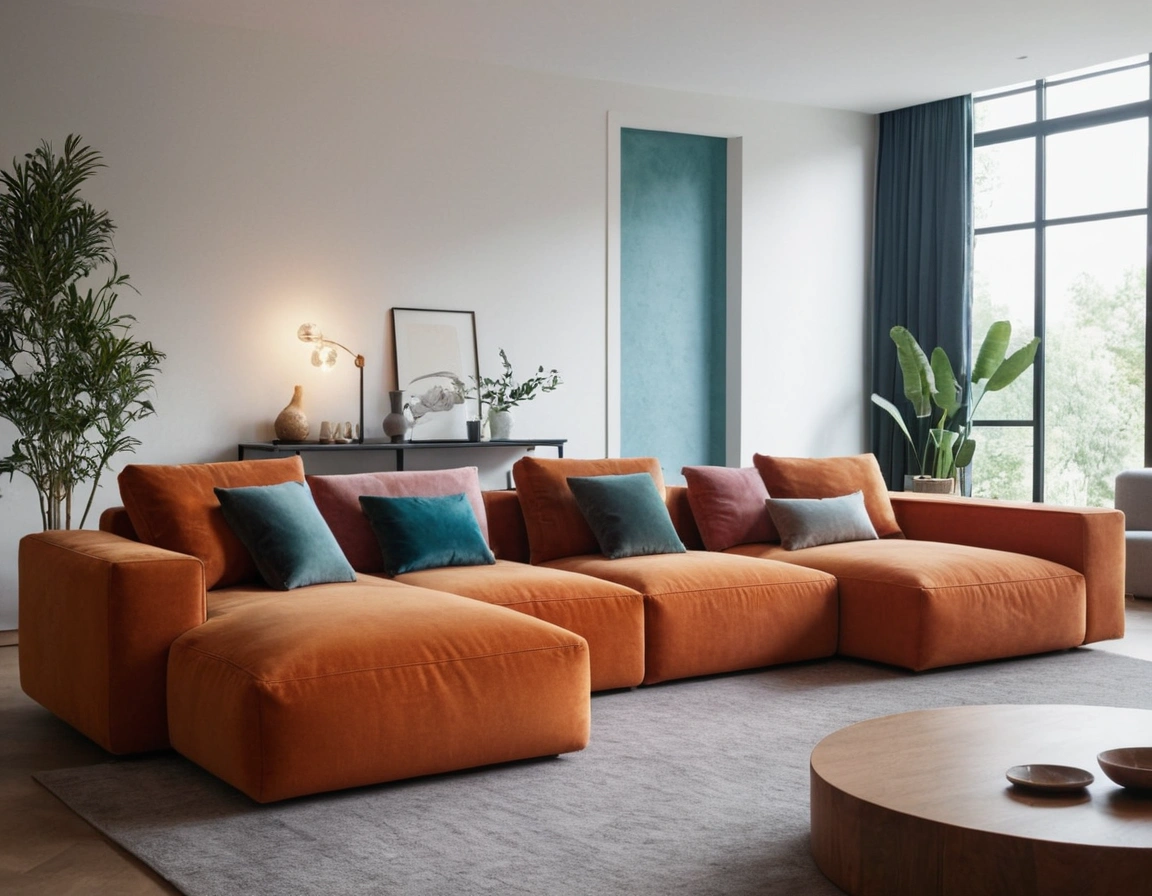
Let’s cut the crap: most sofas lock you into one layout forever. You buy a three-seater, you’re stuck with a three-seater. But a modular sofa flips that whole logic on its head. You rearrange it, expand it, shrink it, and reshape your living room depending on whether it’s movie night, a birthday party, or just you and a book.
I’ve dug into how these things actually work — not the marketing fluff, the real practical stuff — and the verdict is clear: if you’re shopping for a sofa in 2026, going modular is one of the smartest moves you can make. Here’s why, and how to squeeze every drop of value out of it.
Why a Modular Sofa Beats a Traditional Couch Every Time
A modular sofa is built from separate pieces — call them modules, sections, or blocks — that you clip or push together however you want. Corner unit here, chaise there, armless seat in the middle. That’s the whole game.
The reason this matters is simple: your life changes, but a fixed sofa doesn’t. You move apartments, you have kids, you start hosting friends every weekend. A traditional couch becomes a problem. A modular sofa just gets reconfigured.
And no, this isn’t a niche trend. Big names like IKEA (with the Vallentuna and Jättebo lines) and Lovesac have built entire businesses around this concept. There’s a reason it keeps growing.
Adaptability: One Sofa, Any Room Size
Small apartment? Use two modules and a corner. Huge open-plan living room? Line up six sections and create a massive U-shape. The same modular sofa handles both scenarios without you buying anything new.
This is where the adaptable modular sofa design really shines. In tiny flats, every centimeter counts — you can’t afford a couch that eats half the room. With modules, you add or remove seats based on what actually fits, not what the showroom told you to buy.
In big spaces, the opposite problem hits: a small sofa looks lost and sad. Modular setups let you scale up so the sofa anchors the room instead of disappearing into it.
Make It the Focal Point of a Large Living Room
Here’s a take: in a spacious living room, you don’t decorate around the sofa — you decorate around the modular sofa configuration you choose. The sofa becomes the center of gravity.
Arrange a big L-shape or U-shape and everything else falls into place: the coffee table sits in the middle, the rug frames the whole thing, the TV or fireplace faces the seating. It’s not complicated, but it only works if your sofa can actually take that shape.
Pro tip from experience: measure your room’s walking paths before you commit to a layout. A gorgeous U-shape is useless if you have to climb over it to reach the kitchen.
Creative Modular Sofa Solutions for Small Spaces
Compact apartments are where modular sofas earn their keep. You’re not just buying furniture — you’re buying flexibility you literally can’t get any other way.
Think about it: during the day, you push the modules into a tight L-shape against the wall. Friends come over, you pull them apart into a conversation circle. Need a guest bed? Some modules flatten into a sleeping surface.
That kind of small space modular sofa versatility is why interior designers keep recommending them for studios and one-bedrooms. One purchase, five different uses.
Rearrange for Any Occasion — Without Buying New Furniture
This is the part people underestimate. You don’t need a reason to rearrange. Bored of your living room? Shift the modules. Hosting a dinner party? Open up the layout. Want a cozy reading nook? Pull one section aside.
Compare that to dragging a heavy traditional sofa across the floor and praying you don’t scratch the wood. Not the same experience at all.
If you change your decor often, or your space has to serve double duty — office by day, lounge by night — a rearrangeable sofa is the only thing that keeps up with you.
Customizable Comfort: Chaise, Footrest, Whatever You Want
Comfort isn’t one-size-fits-all, and modular sofas finally admit that. You pick the pieces: chaise longue for stretching out, footrest ottoman for propping your legs, armless seats for a cleaner look, corner units for wrapping around a space.
Want deep seats? Get deep modules. Prefer firm cushions? Choose firm. The customizable modular sofa approach means you’re not settling for whatever the manufacturer decided comfort should feel like.
Quick checklist before you buy modules:
- Measure your space and note door widths — modules have to fit through them.
- Check the connector system (clips, brackets, or just gravity). Loose modules slide around.
- Confirm fabric options — removable, washable covers are a lifesaver with kids or pets.
- Ask about individual module replacement, not just full-set warranty.
Modern Style That Instantly Updates Any Room
Modular sofas lean contemporary by default. Clean lines, low profiles, neutral tones that work with almost anything. Drop one into a dated living room and it immediately looks ten years younger.
That said, don’t assume all modular sofas look the same. You’ve got Scandinavian minimalism, mid-century styles, and even chunky cloud-like designs. Pick the one that fits your vibe rather than chasing whatever’s trending on Pinterest this month.
Storage Built Right Into the Sofa
Some modular models hide storage compartments under the seats. That’s a game-changer in small living rooms where every square foot fights for its life.
Blankets, board games, kids’ toys, extra cushions — all swallowed up by the sofa itself. No more ugly storage boxes cluttering the corner. If space is tight, prioritize models with this feature; it’s worth the extra cost.
What Nobody Tells You About Modular Sofas
Honest moment: modular sofas aren’t perfect. Gaps can appear between modules if the connectors are weak. Cheap sets feel wobbly after a year. And if you buy a trendy color, replacing a single damaged module later can be a nightmare.
My advice? Spend more upfront on a solid frame and a common fabric color. Future-you will thank present-you when a module needs replacing or you want to add a section.
Also, don’t fall for “modular” sofas that are really just fixed pieces bolted together. Real modularity means you can separate and recombine them freely. Test it in the store before you pay.
The Bottom Line on Modular Sofas in 2026
If you want furniture that adapts to your life instead of the other way around, a modular sofa is the answer. It optimizes space, flexes for every occasion, and lets you customize comfort in ways traditional couches simply can’t.
Just go in with your eyes open: measure, check the connectors, pick a timeless fabric, and buy from a brand that sells individual modules. Do that and you’ve got a sofa that works for you for the next decade — no matter how many times you redecorate.