

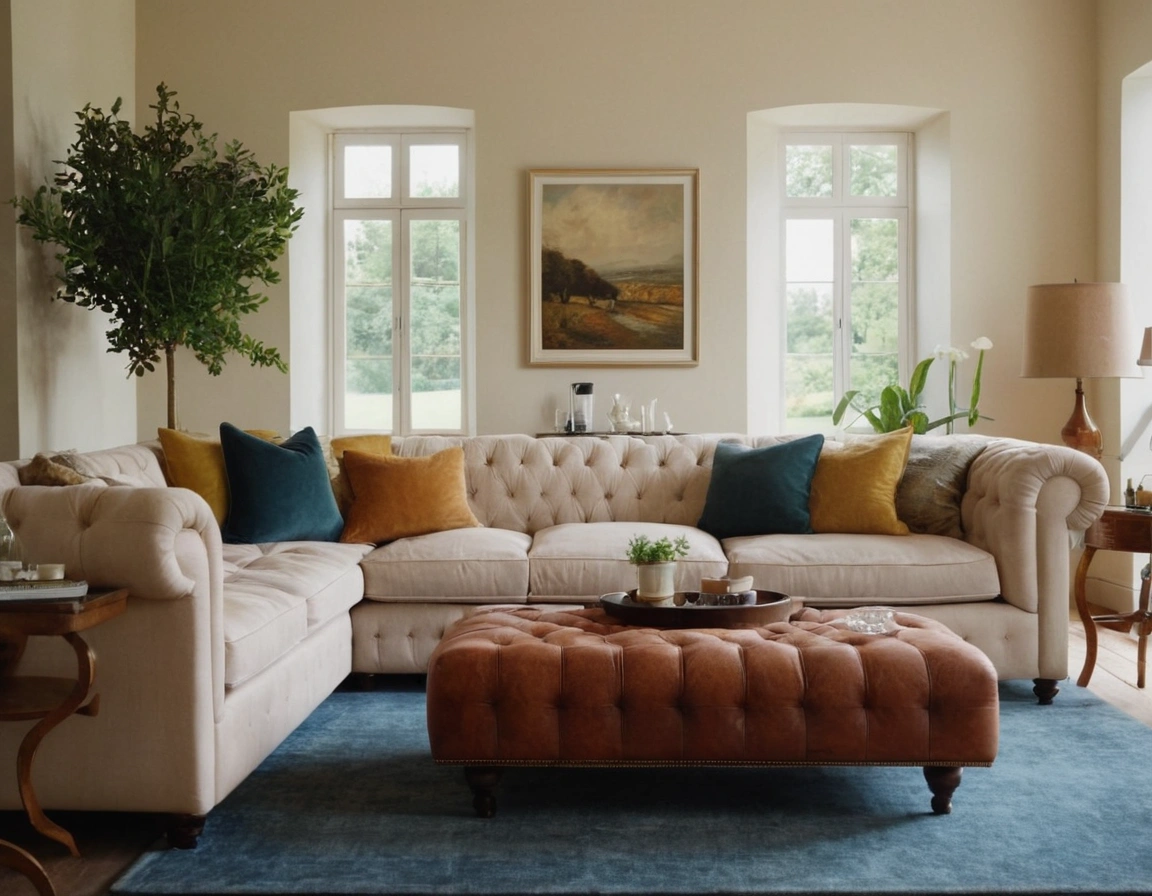
So you’re thinking about a Chesterfield sofa. Good call. But let’s cut the fluff: most people buy one for the wrong reasons and end up with a piece that looks great in a showroom and terrible in their living room. This guide is about avoiding that. I’ve spent hours digging through interior design sources, manufacturer specs, and real buyer feedback, and here’s the straight talk on choosing a Chesterfield sofa that actually works in your decor.
What Makes a Chesterfield Sofa Different From Any Other Couch
A true Chesterfield isn’t just any tufted sofa. It has specific DNA: rolled arms that are the same height as the back, deep button tufting, and no separate back cushions. That’s the classic Chesterfield sofa definition, and if a sofa doesn’t have those three things, it’s just a fancy couch with a marketing label.
The name comes from the 4th Earl of Chesterfield, who supposedly commissioned the first one in the 18th century. Whether that story is 100% true is debatable, but the design stuck because it works. It’s symmetrical, imposing, and reads as expensive even when it isn’t.
Here’s the thing nobody tells you: that iconic look comes with trade-offs. The rolled arms eat up more floor space than a standard sofa of the same seating capacity. And the tufting, while gorgeous, is a dust magnet. If you have pets or kids, think hard before committing.
Leather vs. Velvet: The Chesterfield Sofa Material Decision
Leather Chesterfield sofas are the default for a reason. They age well, wipe clean, and deliver that library-meets-gentlemen’s-club vibe instantly. Full-grain or top-grain leather is what you want. Bonded leather is a scam at Chesterfield prices — it peels within three years, guaranteed.
Velvet Chesterfield sofas are the modern rebel. They soak up color beautifully — emerald, navy, mustard, blush — and feel softer against the skin. But velvet shows every imprint and needs regular brushing. In a high-traffic living room with a Netflix-and-chips lifestyle, velvet will look tired fast.
My take? If this is your forever sofa, go leather. If you’re styling a space for impact and rotate furniture every few years, velvet is the bolder, more photogenic play.
Size Matters More Than You Think
Chesterfield sofas typically come in three sizes: two-seater (around 65–70 inches), three-seater (around 85–90 inches), and the grand four-seater or XL version that can hit 100 inches or more. Measure your room before you fall in love with anything online.
Rule of thumb: leave at least 18 inches of walking space around the sofa. Less than that and your living room starts feeling like a furniture warehouse. Also check doorways and stairwells — a 90-inch Chesterfield won’t fit through a 28-inch door frame, and return shipping on a sofa is brutal.
Small apartments can absolutely handle a Chesterfield sofa, but go for a two-seater with slim rolled arms. Skip the oversized wingback version unless you’ve got at least a 12×12 foot living area.
Color: The Make-or-Break Decor Choice
Tan, cognac, and oxblood leather are the safest Chesterfield sofa colors. They work with warm woods, neutral walls, and both traditional and industrial interiors. Black leather is dramatic but can feel cold in small spaces unless you balance it with warm textiles.
If you want a Chesterfield sofa that fits a modern decor scheme, think beyond the browns. Deep green, slate grey, or even cream leather can look stunning — just be aware that cream leather and red wine are natural enemies.
Match the sofa to your room’s undertones, not just the wall color. A warm-toned leather against cool grey walls creates tension that no amount of throw pillows will fix.
Comfort: The Elephant in the Room
Let’s be honest — classic Chesterfields aren’t the comfiest sofas on earth. The tufting creates a firm surface, and the lack of loose back cushions means you sit more upright than you would on a sectional. If you want to sink into a sofa for movie marathons, this might not be your piece.
That said, modern Chesterfield sofa designs often soften things up with deeper seats, foam-and-feather cushion blends, and slightly reclined backs. Look for seat depth of at least 22 inches if you plan to actually lounge on it.
Test it in person if you can. Sit for at least ten minutes. If your lower back starts complaining in the showroom, it’ll be worse at home.
Frame, Filling, and the Stuff Salespeople Skip
A Chesterfield sofa is only as good as its frame. Kiln-dried hardwood is the gold standard. Avoid particle board or plywood frames — they warp and squeak within a couple of years. Ask directly what the frame is made of. If the salesperson dodges the question, walk away.
For filling, high-resilience foam wrapped in feather or down gives the best balance of support and softness. Cheap sofas use low-density foam that flattens into a pancake. A good Chesterfield sofa should hold its shape for a decade or more.
Check the legs too. Solid wood legs with proper joinery beat screw-on plastic every time.
How to Style a Chesterfield Sofa Without Looking Stuffy
The fastest way to make a Chesterfield sofa look dated is to decorate around it like it’s 1920. Skip the matching wingback chair and the heavy velvet curtains. Instead, mix in modern elements: a sleek floor lamp, a graphic rug, a minimal coffee table.
Throw pillows should contrast, not match. A tan leather Chesterfield with black and white geometric cushions looks sharp. The same sofa with beige tonal cushions looks like a hotel lobby nobody wants to sit in.
Add a throw blanket in a texture that clashes intentionally — chunky knit against smooth leather, for example. That contrast is what makes a Chesterfield sofa feel lived-in rather than showroom-staged.
Is a Chesterfield Sofa Worth the Money in 2026?
Yes, if you buy the right one. A well-made Chesterfield sofa is a genuine long-term investment. It doesn’t follow trends, so it won’t look dated in five years. Resale value on quality leather Chesterfields is surprisingly strong, unlike most upholstered furniture.
Where people go wrong is buying cheap. A $600 Chesterfield sofa is going to look and feel like a $600 sofa. Expect to pay $1,500–$4,000 for something decent, and more for handmade or designer pieces.
Bottom line: choose your Chesterfield sofa based on frame quality, material honesty, and how it fits your actual space — not on how good it looks in a catalog photo.