

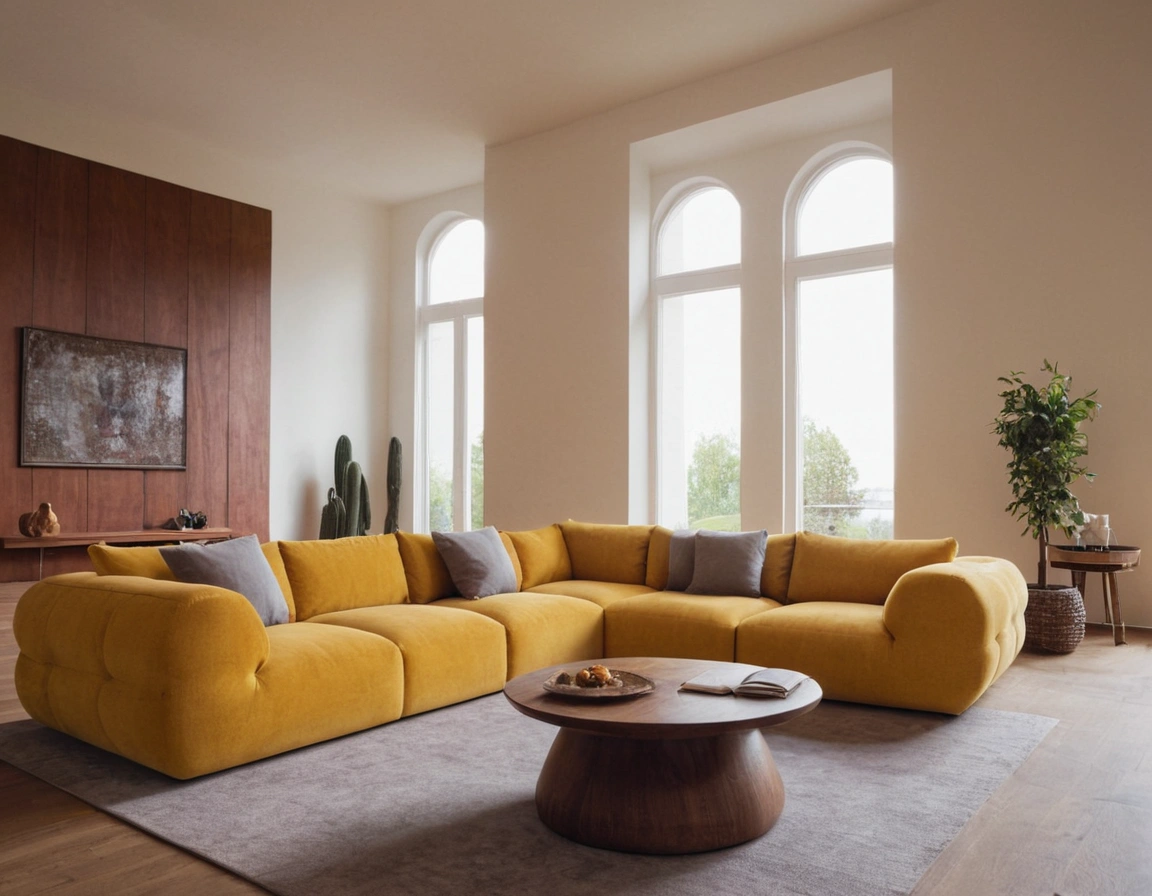
So you’ve got a modular sofa—those big, configurable beasts that can turn a living room into a lounge, a cinema, or a nap zone in seconds. Now you need a table that doesn’t fight it. Most people screw this up by grabbing the first coffee table they see at IKEA. Don’t be most people. Here’s how to actually nail the combo.
Why the Right Table Makes or Breaks Your Modular Sofa Setup
A modular sofa is a commitment. It’s not a dainty little loveseat you can shove in a corner. It owns the room. And because of that, the table you choose has to earn its place. It’s not just about “does it match?”—it’s about flow, scale, and whether you can actually reach your coffee without doing a full body stretch.
If you get the table wrong, your modular sofa looks like a giant blob with a random slab in front of it. Get it right, and the whole room clicks. Let’s fix the wrong part first.
Round Coffee Tables: The Unsung Hero for Modular Sofas
Here’s the thing nobody tells you: modular sofas are usually boxy. They’re built from squares and rectangles. If you put a rectangular table in front of them, you’re just stacking rectangles on rectangles. It gets boring fast.
A round coffee table breaks that up. It softens the whole vibe and—more importantly—it’s easier to walk around. In tight living rooms where a modular sofa eats up 60% of the floor, a round table is a lifesaver. No sharp corners to bruise your shins at 2 AM.
Go for a round table that’s about two-thirds the length of your sofa’s main seating section. Too small and it looks like a stool. Too big and you can’t move.
Rectangular Tables That Align With Your Sofa’s Lines
Okay, I said round is great, but rectangular coffee tables still work—if you use them right. The trick is alignment. A rectangular table should run parallel to your modular sofa’s longest side. That creates a clean visual line and gives everyone seated equal access.
Think of it like a dining table for your couch. If your modular sofa seats five, your table should be long enough that the person on the far end isn’t reaching across three people to put down their drink. That’s just bad hosting.
Material matters here. If your modular sofa is a neutral gray or beige, a natural wood table adds warmth without clashing. If your sofa is already a bold color, keep the table neutral so it doesn’t turn into a circus.
Glass and Metal Tables for a Modern Modular Sofa Look
Want that sleek, “I live in a loft in downtown” vibe? Glass-top tables with metal bases are your friend. They reflect light, make small rooms feel bigger, and pair beautifully with modular sofas that have clean, modern lines.
But be honest: glass shows every fingerprint, every dust particle, every coffee ring. If you have kids or pets, you’ll be wiping it down five times a day. If that sounds like hell, skip it. A matte metal table with a stone top gives you the modern look without the constant cleaning.
The Height Rule You Can’t Ignore
This is where most people mess up. Your coffee table should never be taller than your modular sofa’s seat height. Ever. If it is, you’ll feel like you’re sitting behind a wall. The sweet spot is 1 to 4 inches lower than the seat.
Standard modular sofa seat height is around 16 to 18 inches. So your table should be 14 to 17 inches tall. That’s not a suggestion—it’s a rule. Break it and you’ll hate your living room.
Storage Tables: The Secret Weapon for Real Life
If you actually live in your living room—not just Instagram it—you need storage. A modular sofa with a plain table looks great in photos, but where do the remotes go? The magazines? The random socks your dog drags in?
Coffee tables with drawers or lower shelves are a game-changer. You keep the top clean and stash the clutter underneath. It’s not glamorous, but it’s real. And honestly, a tidy living room beats a Pinterest-perfect one any day.
Mixing Shapes and Heights for a Designer Look
Who said you need one table? A popular trick among interior designers is to use two or three small tables of different heights and shapes next to a modular sofa. A round side table, a low rectangular one, maybe a tiny stool that doubles as a table.
This works especially well with L-shaped or U-shaped modular sofas because you can place a small table at each end. It looks intentional, it’s flexible, and you can move them around when you reconfigure the sofa. Which, let’s be honest, is the whole point of a modular sofa.
Materials That Actually Hold Up
Don’t buy a cheap particleboard table and expect it to survive a modular sofa lifestyle. You’ll be moving that table, spilling on it, and probably sitting on it at some point. Go for solid wood, metal, or stone. Glass is fine if you’re careful.
And skip the high-gloss finishes. They show scratches like a detective shows clues. Matte or satin finishes hide real life much better.
Final Thought: Your Sofa Doesn’t Need a Table—You Do
The best table for your modular sofa is the one that fits your actual life. If you host parties, get a big rectangular one. If you have a tiny apartment, go round. If you have kids, get storage. Don’t buy for the aesthetic you wish you had. Buy for the one you actually live in.
Get that right, and your modular sofa won’t just look good—it’ll work. And that’s what separates a showroom from a home.