

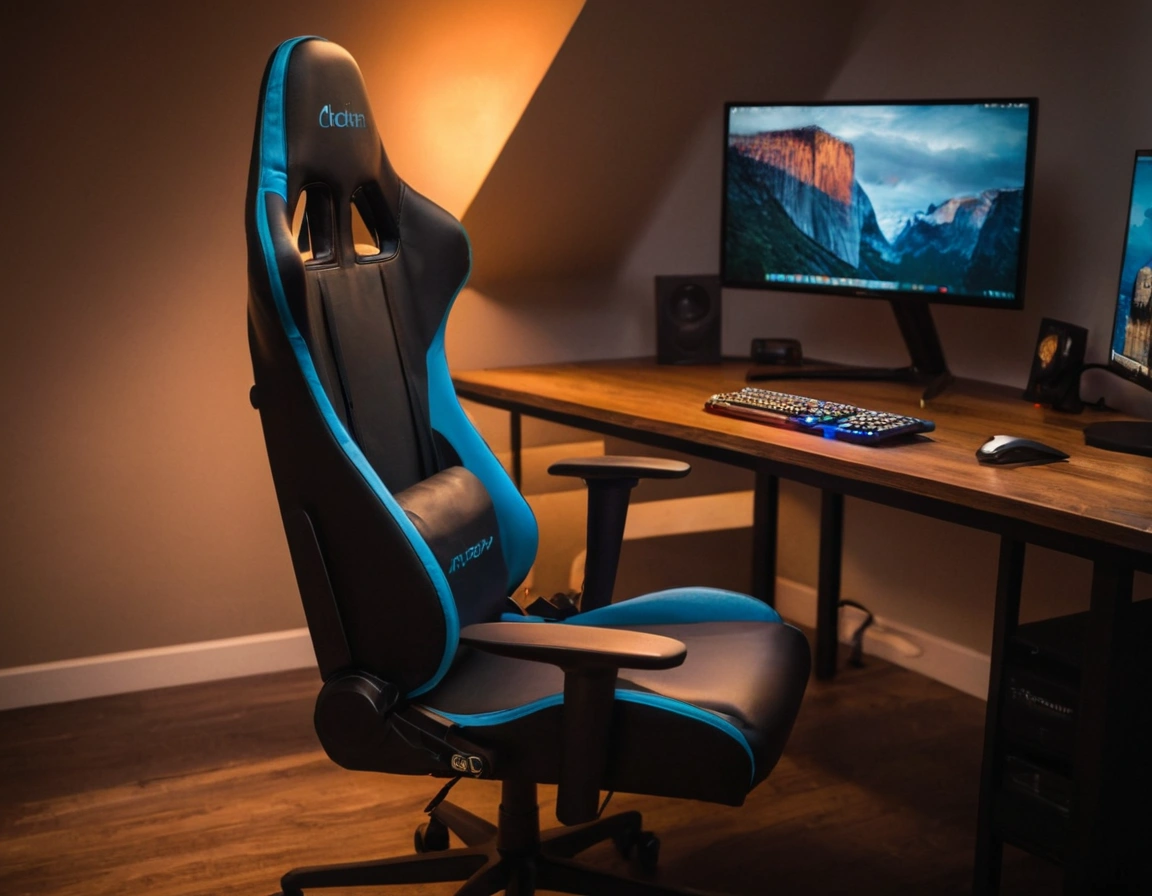
Choosing a gaming chair with or without wheels is one of those decisions that looks trivial until you’ve spent eight hours stuck in the wrong one. I’ve tested both setups for years, and I can tell you the difference isn’t cosmetic: it changes how you move, how you sit, and even how long your back survives a ranked marathon.
So let’s cut the fluff. If your priority is mobility during gaming sessions, wheels win. If your priority is absolute stability and posture control, a fixed base is the smarter pick. Everything else is marketing noise.
Gaming chairs with wheels: the real ergonomic advantage
The main argument for a gaming chair with wheels isn’t convenience, it’s ergonomics. Being able to roll closer to your monitor, pivot to grab a controller, or shift weight to relieve pressure on your lower back without standing up is a genuine health benefit. Static sitting for hours is what wrecks your spine, not rolling a few centimeters.
That said, cheap casters ruin the whole point. A hard nylon wheel on a soft carpet turns your chair into an anchor. You need PU casters for hardwood and larger-diameter wheels for rugs. If your floor is a mess of textures, get a chair mat before blaming the chair.
Also consider the base: nylon bases flex, aluminum bases don’t. For a gaming chair with wheels for long sessions, aluminum is worth the extra money. I’ve seen nylon bases crack after two years of daily use with a 100 kg user. That’s not anecdotal, it’s physics.
Gaming chairs without wheels: why stability beats mobility for some
Here’s the unpopular take: most people don’t actually need wheels. If your desk, monitor, and console are all within arm’s reach, rolling around is just fidgeting. A gaming chair without wheels forces you to commit to one posture, and that commitment is exactly what prevents the slouching that comes from constant micro-adjustments.
Fixed-base chairs also tend to last longer. Fewer moving parts, less wear. The base doesn’t wobble after a year, the gas lift isn’t a factor, and there’s nothing to snap when you lean back hard during a clutch moment.
But be honest with yourself: if you share a workspace, stream with multiple monitors, or have a sim rig next to your desk, a static chair will drive you insane. Stability is only a virtue when you don’t need to move.
Do wheels affect the ergonomics of gaming chairs? Yes, more than you think
Wheels change your center of gravity. A rolling chair lets you lean forward and pull yourself in with your legs, which encourages a more dynamic, active sitting position. A fixed chair locks your hips in place, which can be great for lumbar support but terrible if your desk depth is wrong.
This is why gaming chairs with wheels vs static chairs isn’t a binary question. It’s about matching the chair to your desk geometry. Measure your desk depth first. If it’s under 60 cm, you’ll want wheels to compensate. If it’s 80 cm or more, a fixed base works fine.
Most back pain from gaming chairs doesn’t come from the wheels. It comes from a seat pan that’s too deep, a lumbar pillow in the wrong spot, and a user who never adjusts anything.
Gaming chairs for PC without wheels: the small-space hack
If you’re gaming in a corner of a bedroom or a converted closet, a gaming chair for PC without wheels is genuinely the better call. No rolling means no need for clearance behind you, no scuffed baseboards, and no accidental collisions with a wall you can’t see.
Small spaces also punish bad wheels. Tight rooms mean you’re constantly pivoting, and cheap casters develop flat spots fast. A fixed pedestal base eliminates that entire failure mode.
One exception: if your setup includes a footrest or a low desk, a wheeled chair can be the only way to get your knees at the right angle. Test it before you commit.
Durability: are gaming chairs without wheels more resistant?
Generally, yes. A durable gaming chair without wheels skips the weakest link in the entire assembly: the caster stem and the base hub. Those are the parts that fail first on budget chairs, and they’re also the hardest to replace if the manufacturer discontinues the model.
That said, a high-end wheeled chair with an aluminum base and quality PU casters will outlast a cheap fixed chair every time. Materials matter more than the wheel-or-no-wheel debate. Don’t let anyone tell you otherwise.
Gaming chairs for professional gamers: with or without wheels?
Pro players almost universally use wheels. Not because wheels are inherently better, but because tournament setups, multi-monitor stations, and coaching environments require movement. If you’re grinding ranked from a single fixed desk, you’re not a pro in the logistical sense, and you don’t need to copy their setup.
Streamers are a different case. A chair that rolls quietly matters when you’re on mic. Hard plastic casters on a hard floor sound like a shopping cart. Get rubberized wheels or go fixed.
The bottom line on gaming chairs with or without wheels
Pick wheels if you move, share your space, or have a shallow desk. Pick a fixed base if you’re in a tight room, want maximum stability, or you’re tired of replacing broken casters every 18 months.
And whatever you choose, spend your money on the seat, the lumbar support, and the base material before you worry about the wheels. A great chair with mediocre wheels beats a mediocre chair with great wheels every single day.