

Most people buy a rug because it looks good in the store, drag it home, drop it in the middle of the living room, and then wonder why the space still feels off. I’ve done it. Almost everyone I know has done it.
The truth is that living room rug placement is a geometry problem before it’s a decor problem, and once you get the measurements right, everything else — colors, patterns, materials — falls into line almost by itself.
If you have a chaise longue sofa, which is the trickiest shape to style because of that long extension on one side, you need a different approach than the generic “8×10 fits every room” advice you’ll read everywhere. Let’s break it down without the fluff.
The 20-Centimeter Rule Is Not Optional (But It’s Not the Whole Story)
The old rule says your rug should extend at least 20 centimeters (about 8 inches) beyond the edges of your sofa. That’s fine as a starting point, but it ignores the chaise.
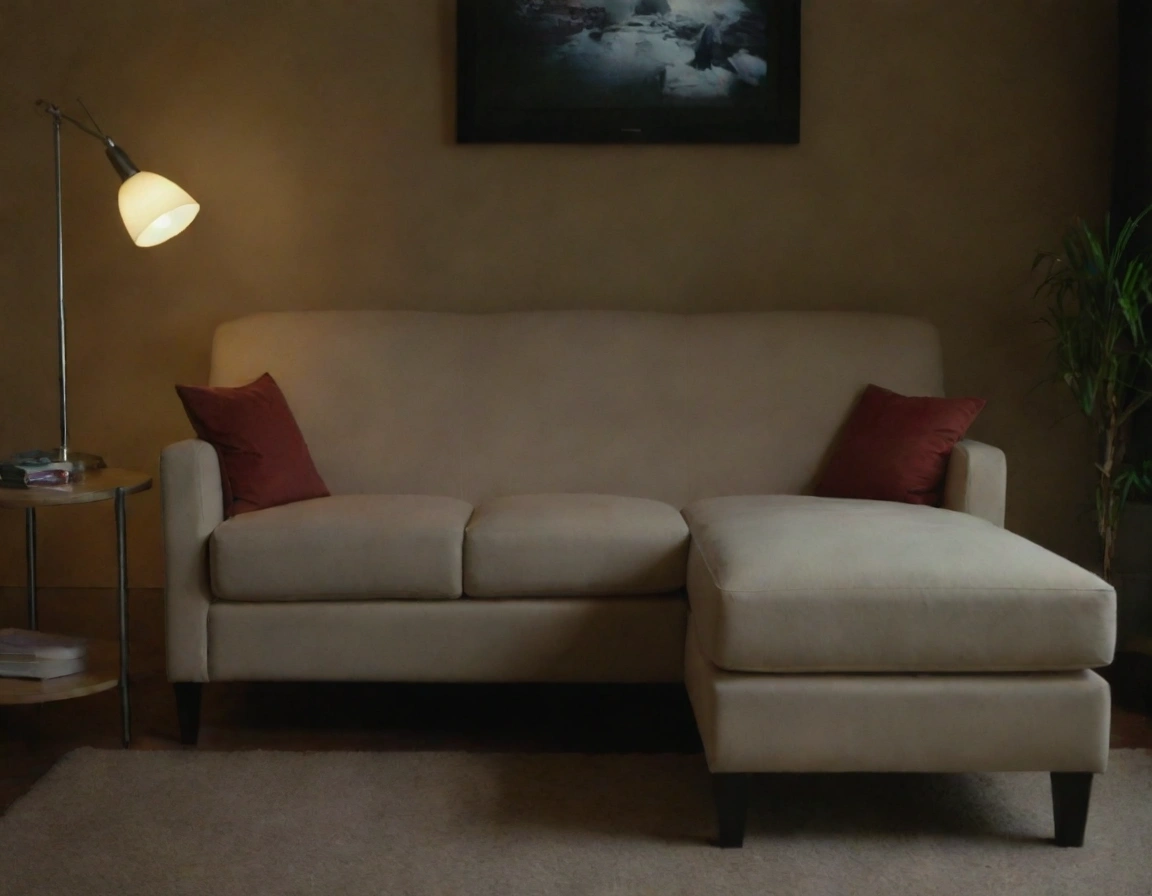
If your chaise longue sticks out on the left, a rug that’s centered on the main body of the sofa will leave the chaise floating half on, half off. That looks broken.
The correct living room rug size for a chaise longue sofa means measuring from the outer edge of the chaise to the outer edge of the opposite armrest, then adding at least 40 to 50 centimeters total — 20 on each side. In a typical 3-seater with a chaise, that usually lands you in the 200×300 cm range (roughly 6.5 x 10 feet) or larger. Anything smaller and you’re decorating a postage stamp.
There’s also a hard rule almost nobody mentions: the front legs of the sofa should always sit on the rug. Not near it. On it. If you can only fit the front legs, fine — but the rug must physically touch those legs, or the sofa looks like it’s hovering outside the conversation.
How to Place a Rug in an Open-Plan Living Room Without Slicing It in Half
Open-plan spaces are where rug placement gets genuinely difficult, because you’re not just decorating a room — you’re drawing invisible walls. The rug is your anchor. It tells the eye where the living room ends and the dining area or kitchen begins.
For an open-plan layout, choose a rug that covers the entire seating zone: sofa, coffee table, and at least the front legs of any armchairs. Leave a consistent 30 to 45 centimeters of bare floor between the rug’s edge and the next functional zone. That gap is what makes the separation feel intentional instead of accidental.
I’d push back hard on the idea that every piece of furniture needs to be on the rug. In a long, narrow open-plan space, forcing a giant rug under everything just creates a carpeted corridor. Better to have two smaller, well-placed rugs defining two zones than one massive one that flattens the whole space.
Color and Pattern: Match the Sofa, Not the Wall
Here’s where most people go wrong. They pick a rug that matches the wall color or the curtains, and the room ends up looking like a beige smoothie. The rug should relate to the sofa and the dominant furniture, not the paint.
If your chaise longue is a solid neutral — think cream, charcoal, oatmeal — this is your license to go bold. A patterned rug with deep blues, rusts, or geometric lines gives the room a focal point that a plain floor can’t. Persian, Moroccan, and abstract contemporary rugs all work here.
If your sofa is already patterned or in a strong color, flip the logic. Go neutral on the floor with a textured but low-contrast rug. Otherwise you’re competing with yourself, and the eye doesn’t know where to rest.
One pattern per zone. That’s the rule. Sofa patterned? Rug plain. Rug patterned? Sofa plain. Two patterns only work if they share a color palette and differ in scale — small print with large-scale geometric, never small with small.
Materials That Survive Real Life (Not Just Staging Photos)
Wool is still the best all-around choice for a living room rug. It’s durable, naturally stain-resistant, and it doesn’t crush flat under a chaise longue the way cheaper synthetics do. Expect to pay more, but expect it to last a decade or more with basic care.
Polypropylene and other synthetic rugs are the practical alternative if you have kids, pets, or a high-traffic household. They clean easily, they’re affordable, and modern synthetics can look convincingly like wool. The downside is that they can shed, pill, and lose their shape faster under heavy furniture legs.
For texture: a thick, plush pile adds warmth and coziness but is a nightmare to vacuum and traps everything. A flatweave or low-pile rug is easier to maintain and looks sharper in minimalist rooms. If you have a chaise longue that people actually lounge on daily, go low-pile — the chaise will leave permanent dents in anything thicker.
Practical Placement Rules That Prevent Trips and Frustration
A rug that slides is a rug that will eventually cause someone to fall. Always use a non-slip pad underneath, especially on hardwood or tile. The pad also extends the rug’s lifespan by reducing friction against the floor.
Keep walkways clear. If the rug edge blocks the path between the living room and the hallway or the main entrance, it’s in the wrong place, no matter how good it looks. In a small living room with a chaise longue, that often means rotating the rug so its longer side runs parallel to the sofa, not perpendicular to the doorway.
Finally, don’t be afraid to pull the rug slightly under the coffee table but not fully beyond it. The coffee table should sit fully on the rug, centered with the sofa’s main body — not the chaise. Center on the chaise and the whole room looks lopsided.
Quick Checklist Before You Buy
- Measure from the chaise’s outer edge to the opposite armrest, then add 40–50 cm total.
- Confirm the front legs of every seat in the zone touch the rug.
- Buy a non-slip pad the same size or slightly smaller than the rug.
- Match the rug to the sofa, not the walls.
- One pattern per zone — no exceptions.
- Low-pile if the chaise gets daily use; plush only if it’s decorative.
- Leave at least 30 cm of bare floor between the rug edge and any adjacent zone.
Get those seven things right and the living room rug placement stops being a guessing game. The room will look larger, the chaise longue will finally feel like part of the design instead of an afterthought, and you won’t be re-arranging furniture every weekend trying to fix a problem that was never about style in the first place.