

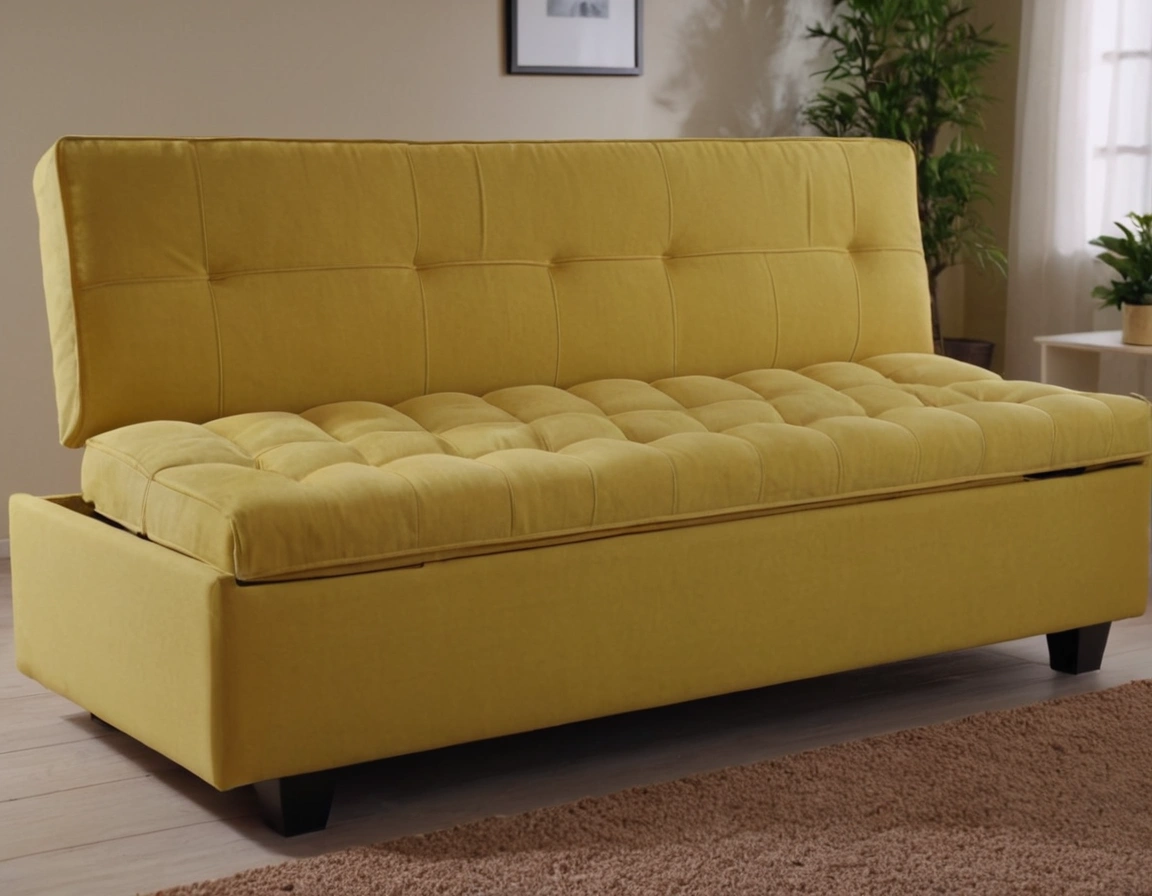
Living in a 40 square meter flat with a partner and a cat teaches you fast that every piece of furniture has to earn its place. A sofa bed for small spaces isn’t a nice-to-have anymore, it’s the only way some of us get a guest room without actually having a guest room. So let’s cut the fluff and talk about what actually works in 2026.
Why a sofa bed beats a regular sofa in a tiny flat
The math is brutal: a decent two-seater sofa eats up around 1.5 square meters, and a proper double bed another 3. That’s half your living room gone. A convertible sofa bed collapses both functions into one footprint, which is the whole point of smart small-space furniture.
I’ve tested this in real flats. When you swap a fixed sofa for a foldable sofa bed, you reclaim enough floor to fit a small dining table or a proper desk. That’s not marketing talk, that’s just geometry.
And no, you’re not sacrificing comfort. Modern models use high-resilience foam and pocket springs that feel closer to a proper mattress than the rock-hard slabs our parents slept on.
How to pick the best sofa bed for small spaces without getting scammed
Most people buy on looks and regret it within three months. Here’s what actually matters when you’re shopping for a compact sofa bed:
- Open mechanism type: click-clack is cheap but noisy and thin. Pull-out with a real mattress is heavier but far better for nightly sleeping. For daily use, go pull-out or folding with a proper mattress, period.
- Mattress thickness: anything under 10 cm is a guest bed for one night only. Aim for 12–14 cm if you want it to feel like a real bed.
- Frame material: solid wood or powder-coated steel. Avoid particle board frames with metal hinges, they wobble within a year.
- Storage: some models hide bedding inside the chaise. In a small apartment, that’s basically free closet space.
If your room is under 20 square meters, prioritize a two-seater with a pull-out mechanism over a bulky three-seater corner sofa. You’ll thank yourself later.
Foldable sofa beds: the real MVP for micro apartments
There’s a category people sleep on (pun intended): the foldable sofa bed. These are the ones that fold flat like a futon or flip open like a book. They’re lighter, cheaper, and often more comfortable than classic click-clack models if you pick a good one.
The catch? They usually sleep one person comfortably, maybe two if you’re close. If you regularly host couples, skip this and go for a pull-out.
For studio apartments or a multifunctional room that doubles as an office, a foldable sofa bed is honestly the smartest call. You fold it up in the morning and suddenly you have a yoga space, a workspace, or room for the dog to run around.
Rule of thumb I follow: if the sofa bed takes more than 30 seconds to convert, you’ll stop using it. Convenience is the whole point.
Comfort: the part everyone lies about
Here’s the uncomfortable truth. Most sofa beds under 500 euros feel fine for a week and then start sagging. The bar mechanism digs into your back, the mattress thins out, and suddenly your guest is sleeping on what feels like a park bench.
My advice: spend the extra 150–200 euros on a model with a certified mattress and a metal mesh base. Brands like IKEA (FRIHETEN, HAMMARN), Innovation Living, and Amazon’s top-rated foldable models consistently deliver here.
Also, buy a mattress topper. A 5 cm memory foam topper transforms a mediocre sofa bed into something genuinely comfortable. It’s the cheapest upgrade you’ll ever make.
Style and decor: don’t let it look like a hospital bed
Sofa beds used to scream “temporary furniture.” Not anymore. Current models come in bouclé, velvet, linen, and leather-look fabrics in neutral tones that fit almost any interior.
For a small apartment, pick light colors (beige, cream, light grey) to make the room feel bigger. Dark sofas in tiny rooms visually shrink the space, and that’s the opposite of what you want.
If you’re tight on space, look for models with removable and washable covers. In a small flat, spills happen more often because everything is closer together.
Real talk: who should actually buy one
A sofa bed for small spaces makes sense if you fit one of these profiles:
- You live in a studio or one-bedroom flat and want a guest bed without a second bedroom.
- You work from home and need a room that switches functions between day and night.
- You rent and can’t install a permanent wall bed (Murphy bed).
But if you have a spare bedroom, honestly, just buy a real bed. A sofa bed is a compromise, and you shouldn’t pretend otherwise.
What a sofa bed really gives you in a small space is flexibility. It lets you host, rest, and live in the same square meters without feeling like you’re camping in your own home.
The verdict I’d give a friend
If you’ve got 500–900 euros to spend and less than 30 square meters to work with, get a pull-out sofa bed with a 12 cm mattress, a solid wood frame, and a neutral washable cover. Skip click-clack models unless it’s for occasional use only.
Measure your door, your hallway, and your stairwell before ordering. I’ve seen more sofa beds returned for not fitting through a doorway than for being uncomfortable. That’s the real small-space trap nobody warns you about.