

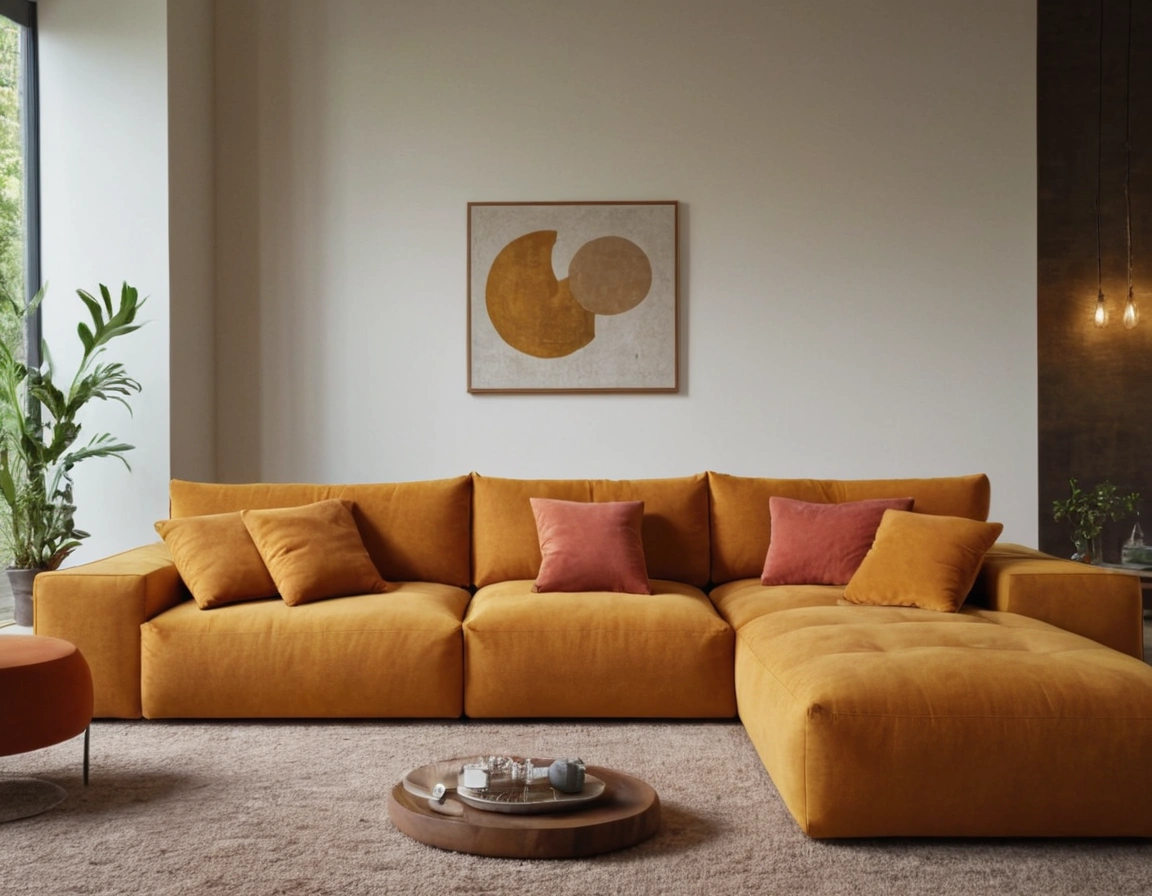
Buying a modular sofa is one of those purchases you only get to screw up once. Drop four grand on a sofa that doesn’t fit your doorway, and you’ll be staring at that mistake every single day for the next decade. So let’s cut the fluff and talk about what actually matters before you swipe your card.
The modular sofa market has exploded in 2026. Every brand from IKEA to Article to your local showroom is pushing sectional configurations like they’re the answer to everything. They’re not. They’re great, but only if you know what you’re doing.
Measure Your Space Like Your Life Depends On It
First thing: grab a tape measure and stop trusting your eyes. A sofa that looks perfect in a 3,000 sq ft showroom can turn your 12×14 living room into a claustrophobic nightmare.
You need three numbers: the wall length where the sofa goes, the depth of the room, and every doorway or hallway the sofa has to pass through. Modular sofas arrive in pieces, which helps, but the chaise section on some models is still 80 inches long. That won’t fit through a standard 30-inch interior door.
Leave at least 14 inches between the sofa and a coffee table, and 30 inches for main walkways. If you’re squeezing a modular sofa into a small apartment, go for an L-shape with a narrow chaise, not a U-shape. The U-shape sounds luxurious until you realize you’ve walled yourself in.
Configuration: Don’t Buy More Sofa Than You Need
This is where people overspend. They see a six-piece modular sofa on Instagram and think “more is better.” Wrong. More is heavier, more expensive, and harder to rearrange later.
The most searched modular sofa configurations in 2026 are chaise + 2-seat, L-shape, and U-shape. Here’s my take, based on actually living with these things:
- Chaise + 2-seat: Best for couples or solo dwellers. Compact, comfortable, easy to move.
- L-shape: The sweet spot for families of three to four. Works in most living rooms without dominating the space.
- U-shape: Only if you have a dedicated media room or a huge open-plan space. In a normal living room, it’s overkill.
Also think about whether you want a modular sofa that converts into a bed. Some do, but the mechanism adds weight and cost. If you only host guests twice a year, skip it and buy a decent air mattress instead.
Upholstery Materials: The Real Talk
Fabric or leather? That’s the eternal modular sofa debate. Here’s what actually holds up.
Leather is the winner if you have kids, pets, or a habit of eating on the couch. It wipes clean, ages well, and doesn’t hold odors. Downside: it’s cold in winter, sticky in summer, and premium leather pushes the price up by 40-60%.
Performance fabrics like Sunbrella or Crypton have closed the gap dramatically. They resist stains, are pet-friendly, and come in hundreds of colors. If you want the look of fabric without the anxiety, this is your move.
Velvet and bouclé look incredible in photos. In real life, they collect pet hair like magnets and show every crumb. Beautiful, high-maintenance, and I’d only recommend them for adult-only households.
Pro tip: ask for a fabric swatch and spill coffee on it at home before you buy. Any decent retailer will give you one for free.
Comfort and Support: Test It Like You Mean It
Never buy a modular sofa online without sitting on the exact model first. I don’t care how many five-star reviews it has. Your body is not the reviewer’s body.
Sit for at least 15 minutes. Lie down. Try to get up without using your hands. If you sink into a hole or feel the frame through the cushion, walk away.
Look for high-resilience foam with a density of at least 1.8 lbs per cubic foot. Cheaper sofas use 1.2 or 1.4, which flatten within 18 months. Feather-wrapped cushions feel luxurious but need fluffing weekly. If that sounds exhausting, stick with foam.
The frame matters just as much. Kiln-dried hardwood is the gold standard. Plywood is acceptable. Particle board is a red flag, especially for a modular sofa that gets reconfigured often.
Style, Resale Value, and the 10-Year Rule
Trendy modular sofas come and go. Remember the gray tufted everything era? Yeah. Pick a silhouette you’ll still like in 2036, not 2027.
Neutral colors (charcoal, oatmeal, navy, cognac leather) hold resale value far better than bright statement colors. If you want color, do it with throw pillows and a rug.
One more thing: check whether the covers are removable and machine-washable. Replacement covers for a modular sofa can cost $400-800 for a full set. If the brand doesn’t sell them, you’re stuck with whatever stains happen.
Delivery, Assembly, and Hidden Costs
Most modular sofas ship in 3-5 boxes. Assembly ranges from 10 minutes (IKEA-style click-in) to two hours (bolting brackets). Read the reviews about assembly before you buy, not after.
Watch for these extra costs: white-glove delivery ($100-250), old sofa removal ($50-150), and restocking fees if you return it (often 15-25%). A “$1,200 modular sofa” can easily become $1,600 by the time it’s in your living room.
My honest advice? Spend 70% of your budget on the frame and cushions, 30% on aesthetics. The pretty sofa that sags in two years is not a deal. The boring one that lasts 15 is.
Now go measure your living room. Twice.