

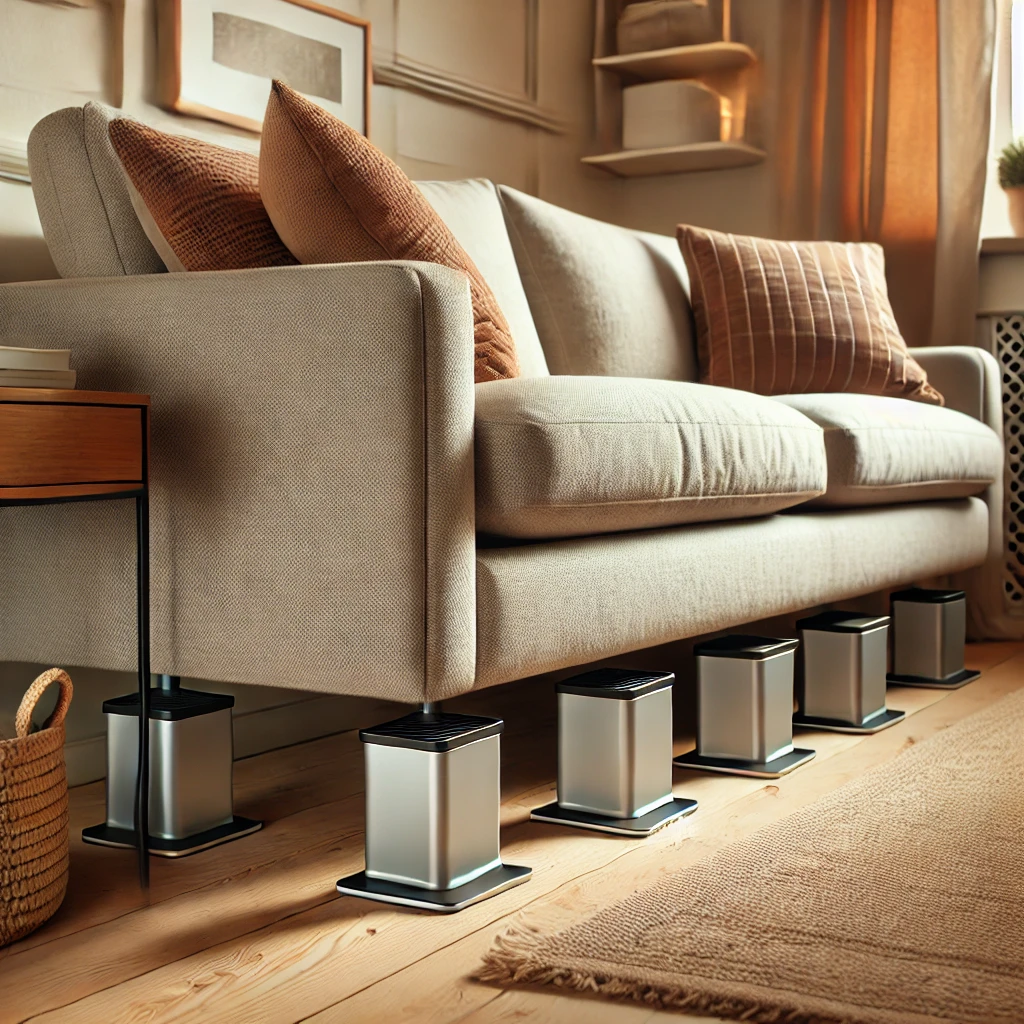
Have you ever sat on a sofa and felt that it’s too low? It’s a more common problem than you think, but it has a solution: sofa lifters. They are small devices that can make a big difference in how you enjoy your favorite piece of furniture. But, are they really necessary? How are they used? Today I’ll tell you everything.
Imagine this: you get home after a long day and collapse onto your sofa. But instead of feeling comfortable, you notice that it’s too low and it’s hard for you to get up. That’s where adjustable furniture supports come in, which allow you to customize the height of your sofa without replacing it with a new one.
If you’ve ever wondered how to raise the height of a sofa easily, sofa lifters are the answer. They’re installed quickly and without complications. There are different types, from lifting legs for heavy furniture to bases with height adjustment. And the best part is that you don’t need to be a DIY expert to install them.
One of the key benefits of these accessories is that they improve ergonomics. If you have knee or back problems, raising the sofa a few centimeters can make a big difference. Additionally, accessories to improve sofa comfort also help maintain a healthier posture.
There are many ways to do it, but not all of them are safe. Some people try to use homemade objects to raise their sofa, but this can be dangerous. The ideal thing is to opt for solutions to raise sofas without damaging them, such as adjustable bases specifically designed for this purpose.
If you’re looking for an easy and quick alternative, lifting systems for sofas and armchairs are a great option. They work as a solid base that is placed under the sofa’s legs, providing stability without compromising the furniture’s design.
Decorating experts recommend that, if you feel your sofa is too low, you opt for alternatives to adjust furniture height that are safe and effective. A good option is sofa lifters with non-slip materials, which prevent unnecessary movement.
Some people wonder if these devices are really durable. The truth is yes, as long as you choose quality products. Good mechanisms to raise sofas without tools can last for years without needing maintenance.
If you’re interested in trying them, there are several options available on sites like amazon.com, ikea.com, leroymerlin.es and homedepot.com. There you can find everything from simple bases to options with adjustable height.
In short, if you’re looking for tricks to make a sofa taller without changing it, sofa lifters are the perfect solution. They not only improve comfort, but can also give your living room a new look without the need for a big investment. Give them a try and you’ll see the difference! ✅ Corner Sofas How to Choose Sofas Discover the Sofas Why your
Frequently Asked Questions (FAQ)
1. What is a lift chair sofa?
A lift chair sofa is a type of reclining armchair with an electric mechanism that helps people rise from a seated position to a standing one, ideal for elderly people or those with reduced mobility.
2. What is a lift sofa?
A lift sofa is a seat with a motorized mechanism that allows its height to be adjusted or tilted to make it easier for the user to stand up effortlessly.
3. What is an electric lift sofa?
An electric lift sofa is a sofa model that has a motor to automatically adjust its tilt or height via a remote control or built-in buttons.
4. What is a sofa lifter?
A sofa lifter is a device or mechanism that is installed on a sofa to allow its seat to rise or tilt, helping people to stand up more easily.
5. What is a lift sofa?
A lift sofa refers to the same mechanism that allows a sofa to be raised or tilted, facilitating the mobility of people with difficulty sitting down or standing up.
6. What are sofa lifters?
Sofa lifters are systems designed to improve the functionality of a sofa, adding lifting mechanisms that allow its position to be adjusted for greater comfort and accessibility.
7. What are sofa lifters?
Sofa lifters are electric or mechanical devices that allow a sofa to be raised or tilted to make it easier to use for people with reduced mobility.