

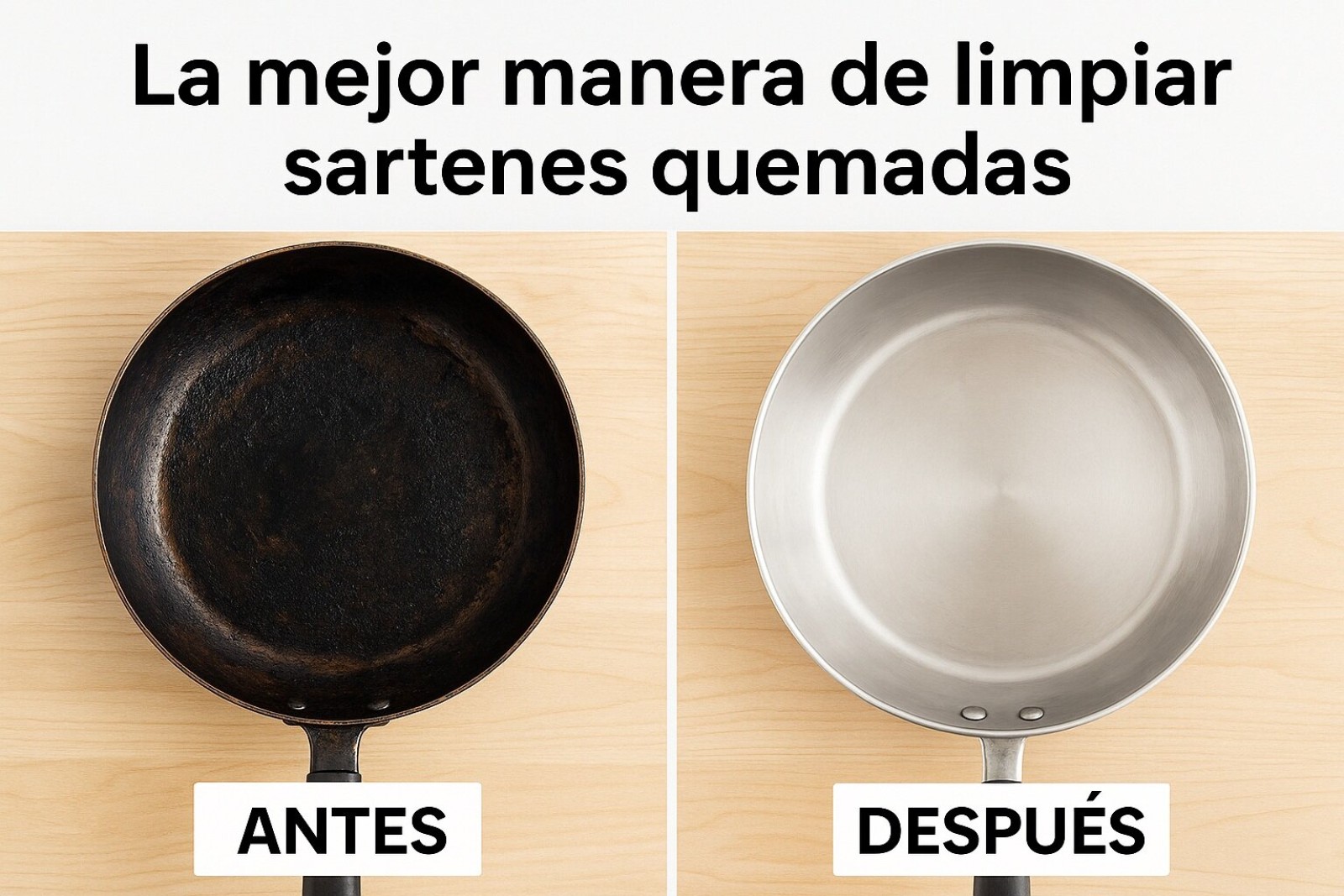
You burnt the pan. It happens. The rice stuck, the sauce turned into a black crust, and now you’re staring at a disaster wondering if you should just toss it. Don’t. Most burnt pans can be saved, and the fix rarely requires harsh chemicals or a new non-stick coating. The trick is knowing which method matches your pan’s material — because what rescues a cast iron skillet will absolutely destroy a cheap non-stick one.
Why burnt residue sticks so hard (and how to break it down)
That black layer is carbonized food — basically carbon fused to the surface. Scrubbing it with force only pushes it deeper and scratches the metal. The real move is to soften it first: heat, water, and a mild acid or alkaline agent break the bond so the gunk lifts off on its own.
So the best way to clean burnt pans is to think like a chemist, not a boxer. Boil water in the pan for five minutes. Most of the crust will loosen enough that a wooden spatula slides it right off. If it doesn’t, you move to the next level: baking soda paste, vinegar, or salt — depending on what the pan is made of.
One rule that applies to every material: never pour cold water into a scorching hot pan. Thermal shock warps the base, and on non-stick it can crack the coating. Let it cool to warm first.
Everyday pantry products that actually remove burns on frying pans
You don’t need a specialty cleaner. The two-ingredient combo that dominates cleaning forums is white vinegar plus baking soda. Pour a cup of vinegar into the pan, add two or three tablespoons of baking soda, and let it fizz for 15 minutes. The reaction lifts carbonized bits. Heat it gently, cool, then wipe with a non-abrasive pad.
Coarse salt is the other workhorse. Sprinkle a thick layer on a warm (not hot) pan and scrub with a folded paper towel. The salt acts as a gentle abrasive that polishes without gouging. Rinse with hot water.
Lemon juice works too. Boil water with the juice of one or two lemons for ten minutes, then let it soak until lukewarm. The citric acid cuts grease and softens residue. It’s slower than vinegar but smells a lot better.
Pro tip: if the burn smells like fish or old oil, add a splash of vinegar to the boiling water — it neutralizes odors while it loosens the crust.
Stainless steel pans: the tough-love approach
Stainless steel can take abuse. No delicate coating to worry about, so you can boil, soak, and scrub harder. Fill the pan with water, add a generous squirt of dish soap, and boil for several minutes. The carbonized grease releases from the metal.
For stubborn stains, make a 50/50 mix of white vinegar and water, bring it to a simmer for 10 minutes, then scrub with a nylon brush. If that fails, a paste of borax and water — yes, borax still works — scrubbed with a soft brush will pull up the last of it. Dry immediately to avoid water spots.
Commercial stainless cleaners exist, but they’re overkill for most home burns. Save them for pans that look permanently discolored.
Cast iron: how to clean burnt pans without killing the seasoning
Cast iron is nearly indestructible, but the seasoning layer — polymerized oil that gives it non-stick properties — is fragile. Never use harsh soap or steel wool on it. Instead, cover the bottom with coarse salt, add a little hot water, and scrub with a chainmail scrubber or stiff brush. The salt lifts residue without stripping the seasoning.
If the burn is thick, boil water in the pan first, sometimes with a splash of vinegar, then proceed with the salt scrub. Rinse with hot water only, dry immediately, and re-season: heat the pan, rub a thin layer of canola or sunflower oil inside, and let it smoke slightly before cooling.
Skip the re-seasoning step and you’ll be back to a rusty, sticky pan within a week.
Non-stick pans: the delicate case where mistakes are permanent
Non-stick is where people ruin pans. Metal utensils and steel scouring pads scratch the coating irreversibly. Once the Teflon or ceramic is flaking, the pan is done — cooking in it releases particles into your food.
To clean a burnt non-stick pan, start with hot water and a drop of dish soap. Soak for one to two hours, then wipe with a soft sponge. If that’s not enough, boil water with a tablespoon of baking soda for five minutes, cool, and gently rub with a non-abrasive sponge. Never soak overnight — water seeps into the handle and base.
And if the coating is already scratched? Toss it. No cleaning method will bring it back.
The natural cleaner recipe that works on almost any pan
Mix half a cup of baking soda, two tablespoons of coarse salt, and enough water to form a paste. Apply it to the burnt area, let it sit for a few hours, then scrub with a soft sponge. This homemade cleaner for burnt pans is non-toxic, cheap, and safe for stainless, cast iron (rinse well), and even non-stick if you’re gentle.
For an extra boost, add a splash of vinegar to the paste right before scrubbing. The fizz does part of the work for you.
None of this is magic. It’s just patience and the right chemistry. Treat the pan according to its material, avoid brute force, and you’ll get years more out of it.