

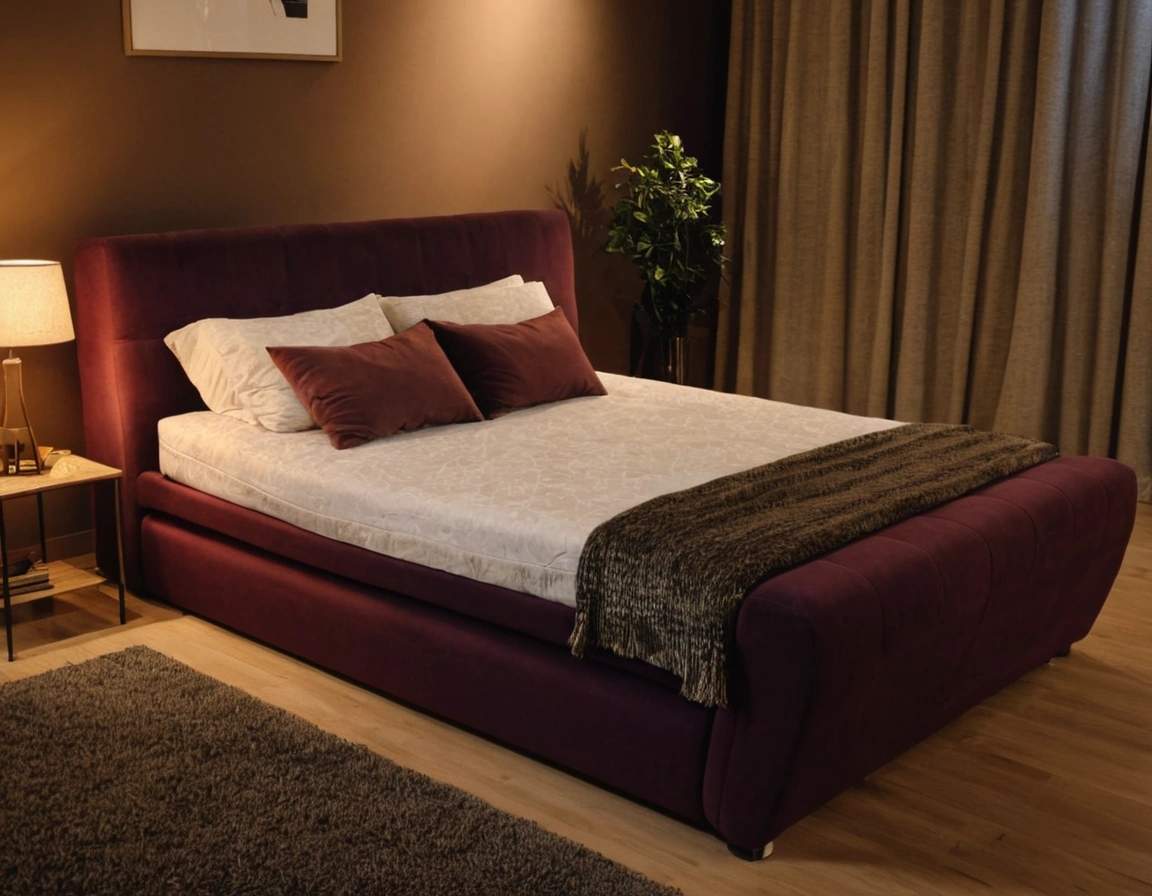
You crash on the sofa bed every night because it’s what you have. Fair enough. But let’s cut the polite nonsense: a sofa bed was never engineered to be your primary mattress, and sleeping on one every single night for months or years will quietly wreck your lower back, your shoulders, and your sleep quality. This isn’t about comfort preferences. It’s about what’s actually happening to your body while you’re passed out on a fold-out frame.
Why a sofa bed destroys your sleep (and your spine)
The core problem with sleeping on a sofa bed every night is the mattress. Most fold-out mattresses are 4 to 5 inches thick, sometimes less. A proper mattress is 8 to 12 inches. That missing foam is the difference between spinal alignment and your hips sinking while your shoulders get punched by a steel bar.
Then there’s the bar. Every convertible sofa has a metal frame that folds. When you lie down, that bar sits right under the mattress. Side sleepers feel it on their ribs. Back sleepers feel it on their lumbar spine. Stomach sleepers feel it everywhere.
Add to that the fact that sofa bed mattresses are usually polyurethane foam with a low density rating, often under 1.8 lb/ft³. Cheap foam does one thing fast: it collapses. Within three to six months of nightly use, you’re basically sleeping on a hammock with a steel skeleton.
The consequences nobody warns you about
Here’s what actually happens to people who sleep on a sofa bed long term. Not hypotheticals. Documented stuff.
- Chronic lower back pain. Lack of lumbar support forces your spine into a curve it wasn’t designed to hold for eight hours. Physical therapists see this constantly.
- Shoulder and hip pressure points. Thin foam means zero pressure relief. You wake up numb.
- Poor sleep architecture. You toss more, hit deep sleep less, and wake up feeling like you didn’t sleep at all. This is the sofa bed sleep quality problem in a nutshell.
- Dust mites and allergens. Sofa beds sit in living rooms, gather dust, and rarely get deep-cleaned. If you have allergies, this is a slow burn.
- Structural failure. The folding mechanism isn’t built for daily deployment. Hinges loosen, welds crack, and the whole thing starts to sag.
One more thing nobody mentions: the temperature. Sofa bed mattresses have almost no breathability. You sweat. You wake up at 3 AM. Rinse, repeat.
Sofa bed vs. real bed: the honest comparison
If you’re weighing sofa bed vs regular bed for daily sleeping, here’s the blunt truth. A $400 sofa bed used every night will feel worse after six months than a $200 mattress on a basic frame. Every time. The physics don’t lie.
A quality mattress has layers: support core, transition foam, comfort layer, sometimes a cooling cover. A sofa bed has one slab of foam on a metal grid. There’s no engineering contest here.
Now, does that mean sofa beds are useless? No. They’re brilliant for guests, for small apartments where space is the real currency, and for occasional naps. The problem is using a sofa bed as your main bed long term. That’s where the damage happens.
Premium sofa beds that actually work for sleeping
If you’re stuck with a sofa bed as your nightly setup — small studio, NYC apartment, whatever — then you need to stop buying $300 junk from a big-box store and look at the serious models. These are the ones that hold up.
1. American Leather Comfort Sleeper
This is the gold standard. No bar. No springs. It uses a platform system with a 5-inch, high-density foam mattress that sits flat. The mechanism pulls out sideways, not up-and-over, so there’s no metal digging into your back. Prices start around $2,500 and go north of $5,000. Worth every cent if you’re sleeping on it every night.
2. Resource Furniture’s Italian converts
Italian-made convertible sofas from brands like Clei use patented mechanisms that transform into genuine beds with real mattresses. Some models let you choose mattress firmness. They’re expensive — think $4,000 to $8,000 — but they solve the fundamental problem: they’re beds first, sofas second.
3. Campeggi and Ligne Roset
Design-forward options that don’t sacrifice sleep. Ligne Roset’s convertible models use high-resilience foam and proper slat bases. You pay for the design, but the sleep quality is genuinely bed-level.
4. The mattress upgrade hack
If you already own a decent sofa bed frame, the single best move you can make is replacing the stock mattress with a custom-cut memory foam or latex mattress made for convertible sofas. Companies like Custom Sleep Design and FoamOrder will cut to spec. You spend $400 to $800 and get a genuinely sleepable surface. This is the highest-ROI fix in the entire category.
What to check before you buy any sofa bed for nightly use
Ignore the marketing. Here’s what matters:
- Mattress thickness. Anything under 5 inches is a no-go for daily sleep.
- Bar placement. Ask specifically: is there a crossbar under the mattress? If yes, walk away.
- Foam density. Look for 2.5 lb/ft³ or higher. If they won’t tell you, they don’t want you to know.
- Mechanism type. Platform pull-outs beat clic-clac and click-clack every time.
- Weight capacity. Should be rated for at least 500 lbs, not 250.
Sleeping on a cheap sofa bed every night isn’t saving you money. It’s costing you sleep, back health, and eventually a chiropractor’s copay.
The bottom line nobody wants to hear
If a sofa bed is your only option, do two things: buy the best one you can afford, and upgrade the mattress immediately. A premium sofa bed for sleeping every night with a proper mattress is genuinely fine. A cheap one will put you in pain within a year.
And if you have the space for a real bed? Get the real bed. Use the sofa bed for what it was designed for: guests who stay two nights, not your spine for the next five years.
Your back doesn’t care about your interior design aesthetic. It cares about support. Give it some.