

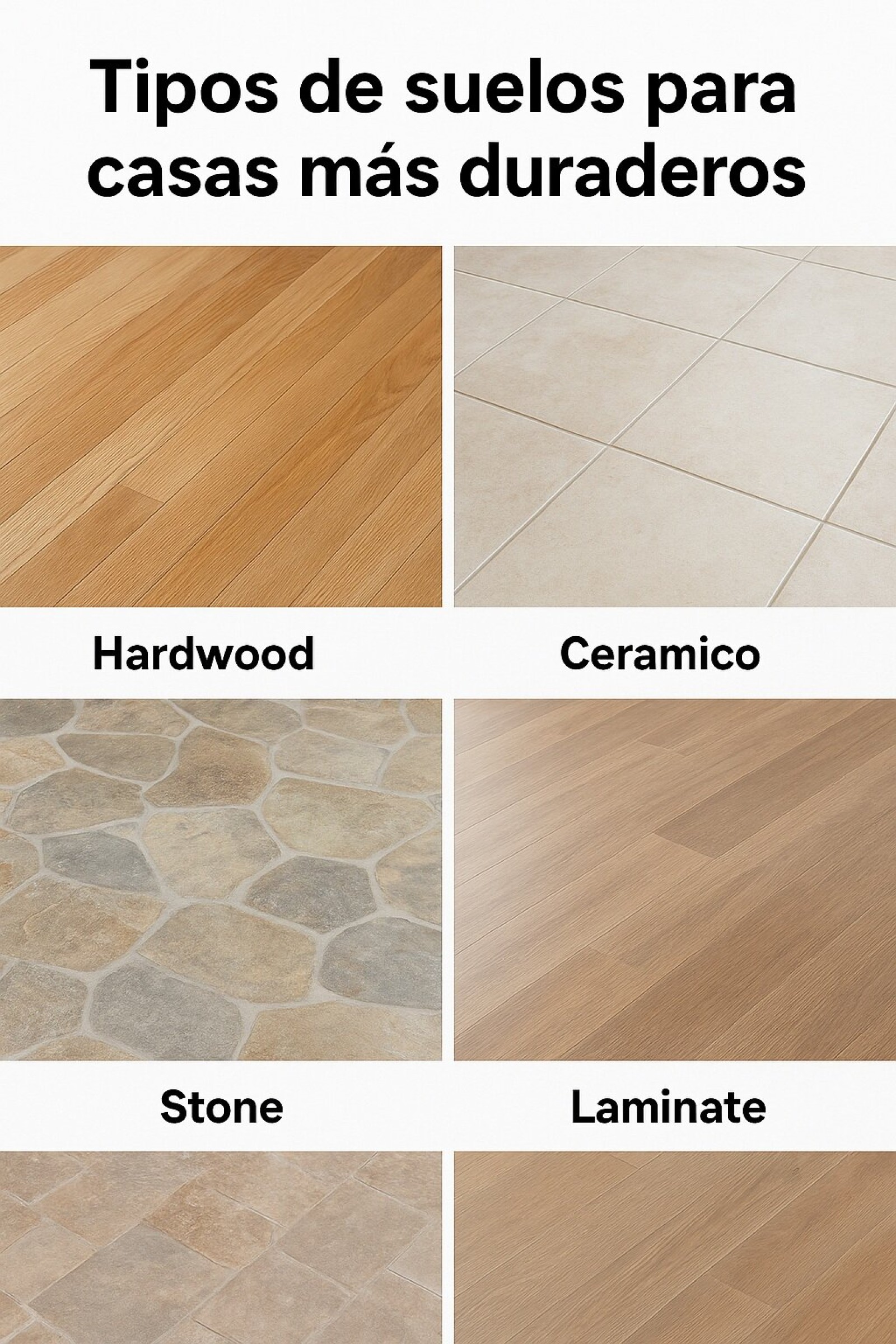
Picking a floor isn’t about pretty photos on Pinterest. It’s about what happens after five years of kids, chairs, dog claws, and mops. I’ve spent way too long reading construction forums, technical datasheets, and talking to installers, and the truth is brutal: there’s no perfect floor, only the one that fits your traffic, your budget, and your tolerance for maintenance.
What actually makes a floor last: traffic, water, and thickness
When people ask me about types of flooring for homes, I always answer with three questions: how many people walk on it every day, how much water will it see, and how thick is it? Those three variables decide 80% of the outcome.
A floor in a hallway used by four people is not the same as a bedroom floor used by one. And a floor in a bathroom is a completely different beast. Ignore this and you’ll be replacing floors in four years, not twenty.
There’s also a myth I want to kill right now: expensive doesn’t always mean more durable. I’ve seen cheap porcelain outlast fancy laminate. It’s about the material’s physics, not the price tag.
Porcelain stoneware: the undisputed king of durability
If I had to bet on one floor for a high-traffic home, I’d bet on porcelain. The durability of porcelain flooring comes from its manufacturing: purer clays, feldspar, quartz, and oxides pressed at insane pressures and fired above 1,200 °C. The result is a slab so dense it barely absorbs water.
That density translates into real-world advantages. Entryways, kitchens, hallways — porcelain eats foot traffic for breakfast. Its water absorption is nearly zero, so bathrooms and even outdoor terraces are fair game. Frost? It laughs at frost.
Maintenance is stupidly simple. No wax, no special sealers. Water and neutral soap. UV rays don’t fade it either, which matters if sunlight hits your living room every afternoon.
And yes, digital printing now replicates wood, marble, and concrete with scary realism. You get the look without the drama.
Downsides you should know: it feels cold, it’s noisy without a good subfloor, and standing on it for hours can wreck your back. It also needs a pro to cut and install — that hardness is a double-edged sword.
Solid wood: the only floor that can be reborn
Solid wood is the grandfather of flooring, and for good reason. The longevity of solid wood flooring comes from one thing: thickness. Because it’s a solid plank, you can sand and refinish it multiple times over decades. Scratches disappear. Dents vanish. It literally resets itself.
Hard species like oak, walnut, or jatoba score high on the Janka scale, so they resist scratches better. But even softer woods can last forever if they’re thick enough to be sanded again.
It’s a living material. It expands and contracts with humidity. That’s charming in a living room and a disaster in a full bathroom or a leaky basement.
Maintenance isn’t hard, but it’s not lazy either. Dry vacuum, damp mop with specific products, and don’t let water sit on it. Do that and you’ll have a floor that outlives you.
Microcement: seamless, waterproof, and misunderstood
Microcement exploded in popularity, and the resistance of microcement flooring is the real reason, not just the industrial look. It’s a mix of cement, polymers, and resins applied in 2–3 mm layers over an existing base, creating a continuous surface with zero joints.
No joints means no cracks for dirt or moisture to hide in. Once sealed, it’s waterproof — viable for bathrooms, kitchens, even shower walls. Impact resistance is good, though a sharp hit can chip it.
The classic complaint is that it cracks. Honestly? When applied correctly over a well-prepped base with reinforcing mesh, it doesn’t. But it’s less elastic than vinyl, so major structural movement can affect it.
Maintenance is easy: neutral cleaner and reapply the sealer every few years depending on traffic. Great for modern, seamless spaces without the coldness of porcelain.
SPC rigid vinyl: the tech-driven alternative
SPC (Stone Plastic Composite) is not your grandma’s roll vinyl. It has an ultra-rigid core of calcium carbonate and PVC, and that core gives it the hardness of rigid vinyl flooring that surprises everyone who touches it.
Its superpower is dimensional stability. It doesn’t expand or contract with humidity, so it works over radiant heating, in bathrooms, kitchens, and unstable climates. It’s 100% water-resistant.
The wear layer, measured in thousandths of a millimeter, decides scratch and stain resistance. High-end SPC handles furniture dragging without flinching. Click installation is DIY-friendly if you’re handy.
But be honest with yourself: it’s thinner than porcelain or solid wood, so it can sound hollow and transmit more noise. And if a plank gets damaged, you replace it — you can’t sand it back to life.
Terrazzo: the comeback kid of high-traffic areas
Terrazzo is back, and it’s not nostalgia. The versatility of terrazzo flooring is huge: marble, glass, or quartz chips in a cement or resin binder, polished to a shine. Infinite color and grain combinations.
Beyond looks, it’s absurdly durable. The density of the aggregates plus the binder creates a surface that laughs at foot traffic. That’s why airports, malls, and institutional buildings use it — places where millions of feet pass every year.
Traditional cement terrazzo needs careful sealing to stay stain-resistant, but the payoff is a floor that can last generations with basic care.
So which one should you actually buy in 2026?
Here’s my honest take, no fence-sitting:
- High-traffic, wet areas, zero patience for maintenance: porcelain. End of story.
- Living rooms, bedrooms, and you love warmth and refinishing: solid wood, if humidity is controlled.
- Modern seamless look, bathrooms included: microcement, installed by a real pro.
- DIY, radiant heating, unstable climate: SPC rigid vinyl.
- Statement floor in a busy space: terrazzo.
Don’t buy a floor because it’s trendy. Buy it because it matches how you actually live. That’s the only decision that survives the years.