
Choosing the flooring for a home is one of the most important decisions when building or renovating. It is not just about aesthetics; it is a matter of durability, functionality, and long-term investment. Many people focus solely on color or texture, but the true value of a floor is measured in the years of service it provides without losing its integrity. Finding truthful information about this can be a challenge, since each material has its defenders and detractors.
When researching specialized construction forums and architecture portals, it is clear that the final choice depends on an equation that considers the traffic in the area, the maintenance one is willing to assume, and, of course, the budget. There is no single material that is best for all scenarios. What works for a kitchen floor may not be ideal for a bedroom.
This article compiles observations and technical data from publicly available sources, with the aim of breaking down the characteristics of the most resistant floors on the market. The idea is to provide a clear overview so that anyone can make an informed decision, knowing the strengths and weaknesses of each option.
The durability of porcelain flooring is unmatched
When talking about pure resistance and absolute durability, porcelain stoneware tends to appear repeatedly as the reference material. Its manufacturing process is key: a mixture of purer clays, feldspar, quartz, and coloring oxides is pressed at extremely high pressures and fired at temperatures above 1,200 degrees Celsius. The result is a slab of extreme density and very low porosity.
This translates into very specific practical advantages. The durability of porcelain flooring is notably high, especially against abrasion and wear from intense foot traffic. It is a practically unbeatable material for high-traffic areas such as entryways, hallways, or kitchens. In addition, its low water absorption makes it ideal for bathrooms, kitchens, and even outdoor terraces, since it is resistant to frost and freeze-thaw cycles.
As for maintenance, it is one of the simplest options. It does not require waxing or special treatments. Cleaning with water and a neutral detergent is more than enough. Its resistance to UV rays is also a notable feature, which means its color will not be affected if it receives direct sunlight constantly. Aesthetically, digitalization technology has made it possible to replicate with astonishing realism the textures of wood, marble, or concrete, offering the visual warmth of these materials with superior technical performance.
An important consideration is that, due to its hardness, it can feel cold to the touch and somewhat noisy if it is not used with an adequate subfloor base. It can also be hard for standing for long periods, so in some cases the use of rugs in work areas is recommended. Its installation requires specialized professionals, since its extreme hardness makes cutting and handling difficult.
Solid wood flooring and its proven longevity
Solid wood is, perhaps, the material with the longest and most proven history in floor construction. Its main appeal, beyond its organic beauty and warmth, is its ability to be restored again and again. A solid wood floor is not just a surface; it is a structural element with a useful life that can extend for decades, and even centuries, as can be seen in many old houses and buildings.
The key to the longevity of solid wood flooring lies in its thickness. Being a solid piece of wood, it can be sanded and varnished or oiled multiple times over its lifetime, thus eliminating signs of wear, scratches, and small dents. Each restoration returns it to its original appearance, making it a very long-term investment. It is a “living” material that reacts to changes in humidity and temperature, expanding and contracting slightly.
Some woods are harder than others, which directly impacts their resistance. Species such as oak, walnut, or jatoba are known for their high hardness on the Janka scale, which makes them more resistant to scratches and wear. However, even softer woods, having considerable thickness, can be restored. Maintenance is not complex, but it does require a certain regularity, with sweeping or dry vacuuming and damp cleaning with specific products so as not to damage the finish.
It is essential to understand that a solid wood floor is not recommended for areas with fluctuating or very high humidity, such as full bathrooms or basements prone to leaks. Constant exposure to water can cause warping and permanent deformation. Even so, under the right conditions, it is difficult to find a material that combines durability, warmth, and the possibility of renewal the way solid wood does.
The resistance of microcement flooring in continuous spaces
Microcement has gained enormous popularity in recent years, and it is not only because of its minimalist and industrial aesthetics. Its resistance of microcement flooring is one of its calling cards. It is a coating of cement, polymers, and resins that is applied in very thin layers (between 2 and 3 millimeters) over an existing base, creating a continuous surface without joints.
This absence of joints is a great ally of durability and hygiene, since there are no cracks where dirt or moisture can accumulate. Once properly sealed with a protective product, it becomes a waterproof surface, which makes it viable for bathrooms, kitchens, and even for covering shower walls, creating a fully integrated environment. Its impact resistance is good, although a very strong blow with a sharp object could cause a chip.
One of the myths surrounding microcement is that it cracks easily. When applied correctly by professionals over a well-prepared base and with the appropriate reinforcing mesh, the system is flexible and resistant to the formation of fissures. However, it is less elastic than vinyl, so structural movements of the building could affect it if they are significant.
Its maintenance is simple, requiring regular cleaning with neutral products and the reapplication of the sealer every certain number of years (depending on traffic) to keep its waterproofing intact. It is an ideal solution for those seeking a modern, continuous look that is highly resistant to water and daily wear, without the visual coldness of pure porcelain.
Rigid vinyl or SPC flooring as a technological alternative
In the category of laminate and flexible floors, rigid vinyl, also known as SPC (Stone Plastic Composite), has represented a true revolution. This is not the flexible roll vinyl of yesteryear; it is a product with an ultra-rigid core composed of a mixture of calcium carbonate and stabilizing PVC. This core is what gives it an exceptional hardness of rigid vinyl flooring.
The main advantage of SPC is its dimensional stability. It is virtually immune to changes in humidity and temperature, so it does not expand or contract as solid wood or even some laminates can. This characteristic makes it perfect for installations over radiant heating without heat, in kitchens, bathrooms, or in climatically unstable areas. It is a 100% water-resistant material.
Its surface wear layer, measured in thousandths of a millimeter, determines its resistance to scratches and stains. High-end products have very robust layers that can withstand intense traffic and even dragging furniture without suffering damage. In addition, its surface usually has an anti-scratch treatment that preserves its appearance for years. Installation, using click systems, is relatively simple and can be a DIY option for people with some experience.
Being a thinner material than porcelain or solid wood, it can transmit more sound and feel “hollow” when stepped on if it is not installed over a subfloor base that dampens noise. Although it is very resistant, a very heavy blow could damage it, and unlike solid wood, it cannot be sanded and restored. If one plank is damaged, the only solution is to replace it.
The versatility of terrazzo flooring for high-traffic areas
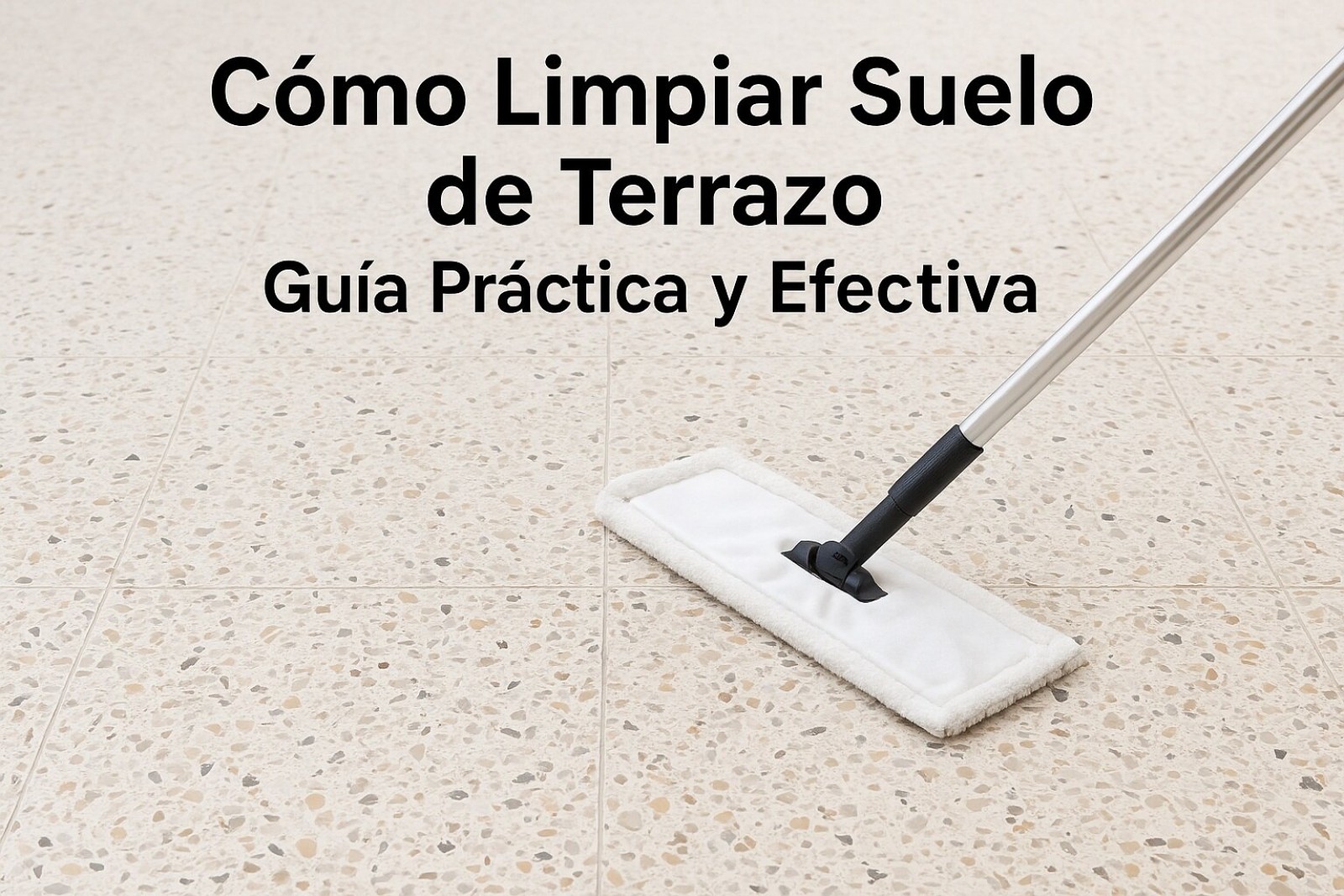
Terrazzo is a classic material that has made a strong comeback, and its revival is no accident. It is composed of fragments of marble, glass, or quartz mixed with a cement or resin binder, which is then polished to obtain a smooth and shiny surface. Its versatility of terrazzo flooring is enormous, allowing for custom designs with infinite combinations of colors and grain sizes.
But beyond its aesthetics, it is a remarkably durable material. The high density of the aggregates (the pieces of marble or quartz) and the strength of the binder create a surface that is extremely resistant to wear from foot traffic. In fact, it is such a robust material that it is commonly used in institutional buildings, shopping centers, and airports, where foot traffic is massive and constant.
Traditional cement terrazzo requires careful sealing to be stain-resistant, while epoxy resin-based terrazzo is inherently less porous and more resistant to chemicals. Once installed and polished, its maintenance is very simple, similar to that of porcelain tile: sweeping and mopping with neutral products. Over the years, if it does show signs of wear, it can be re-polished, thus recovering its shine and original appearance like new.
Its main disadvantage is the cost of installation, which is usually high and requires specialized craftsmen. Additionally, it can feel cold and hard underfoot, and if a glass or ceramic object is dropped on it, it is very likely to break. Even so, for those seeking a floor with a unique character, virtually indestructible and with a lifespan measured in decades, terrazzo is a formidable option.
Frequently Asked Questions (FAQ)
Frequently Asked Questions (FAQ)
What type of flooring is most durable for a home with pets?
For a home with pets, you need flooring that is scratch-resistant and waterproof in case of accidents. Porcelain tile flooring is an excellent option due to its extreme hardness and zero water absorption. Rigid vinyl (SPC) is also ideal for its scratch resistance and complete watertightness. Solid wood, although durable, can suffer more from pets’ claws.
Is microcement flooring water-resistant?
Yes, once the microcement flooring is correctly applied and sealed with its final protective product, it becomes a completely waterproof surface. This makes it suitable for bathrooms, kitchens, and interior terraces, since water does not penetrate the surface, making cleaning easier and preventing moisture damage.
What flooring is most recommended for a kitchen in terms of durability and maintenance?
The kitchen requires flooring that is resistant to stains, impacts from utensils, and water. Porcelain tile flooring is probably the most recommended, due to its extreme hardness and ease of cleaning. Rigid vinyl (SPC) is a very competitive alternative, warmer to the touch and equally water-resistant. Microcement, properly sealed, is also a very valid and aesthetic option.
Can solid wood flooring be durable in a living room with heavy foot traffic?
Absolutely. A solid wood floor made from a hard species such as oak or walnut is an excellent choice for a living room with heavy foot traffic. Its ability to be sanded and restored several times over its lifetime makes it an extremely durable product. With a quality finish (varnish or hard wax oil), it can perfectly withstand a family’s daily life for many years before needing renovation.