

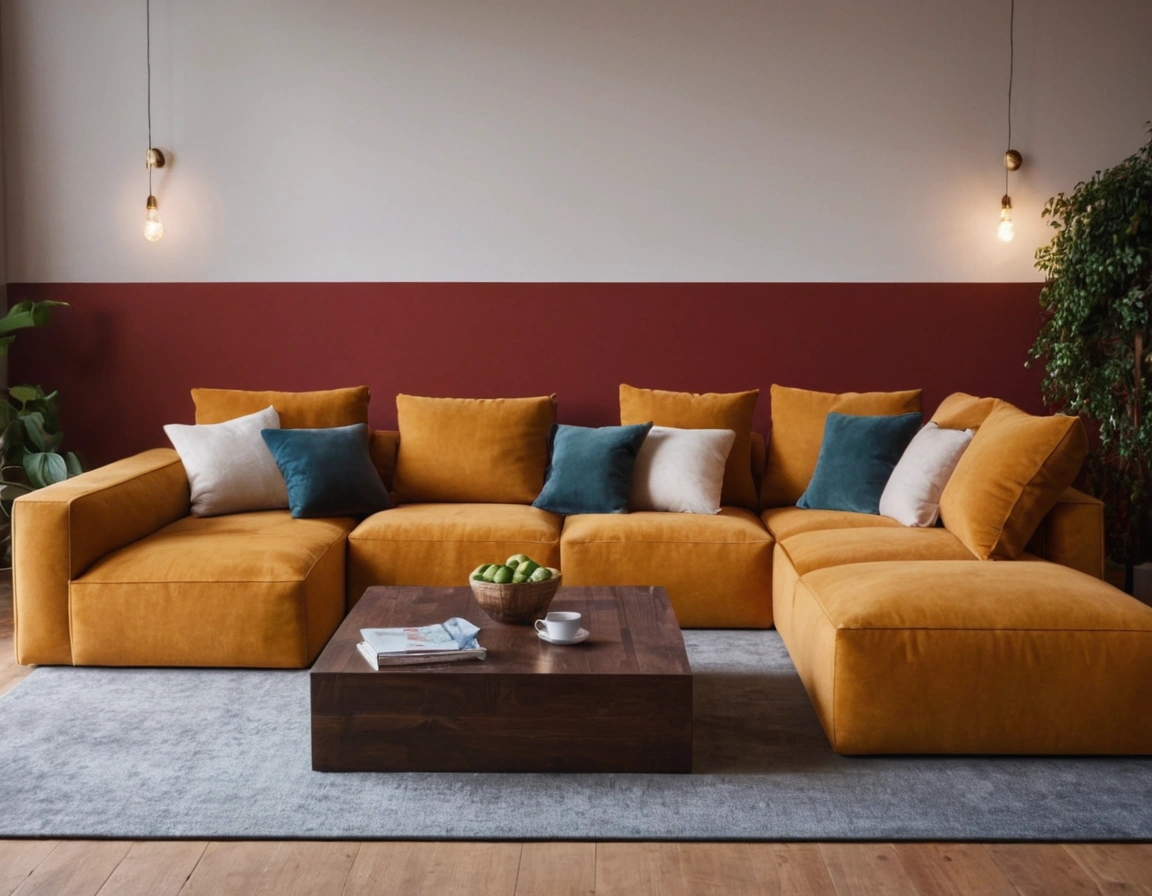
Let’s cut the crap: most sofa advice online is written by people who’ve never actually hauled a three-seater up four flights of stairs. I have. And after years of watching friends blow cash on sofas they hated within 18 months, I can tell you the modular sofa is the one category that consistently earns its price tag. Not always, but more often than fixed sofas. Here’s why, and how to pick one without getting ripped off.
What a Modular Sofa Actually Is (No Marketing Fluff)
A modular sofa is a sofa built from separate sections — usually called modules — that you can join, split, or rearrange however you want. That’s it. No magic. The difference is that each piece works alone as a seat or as part of a bigger configuration.
The modular sofa concept isn’t new. Mid-century designers were playing with it in the 1950s, and IKEA’s Vallentuna and Söderhamn lines made it mainstream. What’s changed by 2026 is the connector systems. Modern brackets are metal, not plastic clips, and they actually hold up when your 90-kilo uncle flops onto the corner module.
Here’s the part nobody tells you: modular doesn’t automatically mean better. A cheap modular sofa with flimsy connectors is worse than a solid fixed sofa. The flexibility only pays off if the build quality is there.
Why People Keep Buying Modular (And When They Shouldn’t)
The real selling point of a modular sofa is adaptability. You move apartments, you rearrange, you have kids, you suddenly need a guest bed. A fixed sofa can’t do any of that. A modular one can.
But — and this is where I’ll be blunt — if you’ve lived in the same place for 10 years and never plan to move, save your money. Buy a great fixed sofa. Modularity is insurance against change, and if nothing’s changing, you’re paying a premium for nothing.
Where modular wins hard: renters, young families, anyone with an open-plan living space that doubles as office and guest room. If your living room has to serve three functions, a modular sofa is the only furniture piece that keeps up.
The 5 Types of Modular Sofas Worth Considering in 2026
Not all modular sofas are built the same. Here’s the breakdown that actually matters:
- Chaise lounge modular sofas: One end extends into a long seat. Great if you actually lie down on your sofa. Bad if you don’t — you’re wasting floor space.
- Modular bed sofas: Pull-out or fold-down. The good ones use a proper mechanism, not a flimsy foam wedge. Test it in person before buying; online reviews lie about comfort.
- Corner modular sofas: Designed to slot into a corner. This is the most space-efficient modular sofa type for small apartments. Don’t buy one if your room is a perfect rectangle, though — you’ll just create an awkward dead zone.
- Reclining modular sofas: Motorized or manual recline on one or more seats. Power recliners need a plug nearby, which people forget until delivery day. Plan your outlets.
- Fully customizable modular sofas: You choose modules, fabric, armrests, cushions, the works. Brands like Lovesac and Burrow lean into this. It’s expensive, but you get exactly what you need.
There’s also a sixth category emerging in 2026: modular sofas with integrated storage ottomans. They’re niche, but if you live in a small flat, they solve two problems at once.
Fabric, Foam, and Frames: What Actually Lasts
Fabric choice matters more than most buyers think. Leather looks great and wipes clean, but it cracks in dry climates and sticks to your legs in summer. Performance fabrics like Sunbrella or Crypton have gotten genuinely good — they handle spills, pets, and kids without looking like plastic.
Foam density is where cheap modular sofa brands cut corners. Look for high-resilience foam at 2.5 lb/ft³ or higher. Anything under 1.8 will sag within a year. If the product page doesn’t list foam density, that’s your answer — walk away.
Frames should be kiln-dried hardwood or high-grade plywood. Metal frames exist but feel cold and industrial. Avoid particle board entirely; it will not survive a single move.
How to Choose Without Regretting It
Ask yourself three questions before spending a cent: How big is the room? How many people actually sit here? Will I move in the next five years?
If the room is under 15 square meters, go with a compact corner module or a two-piece chaise. If you regularly host five or more people, you need at least four modules. If you’re renting and might move, prioritize brands with modular connector systems that survive disassembly — Lovesac’s Sactionals and Burrow’s Nomad line are the two I’d trust.
One more thing: measure your doorway and stairwell. I’ve seen people buy a gorgeous modular sofa only to discover the corner module won’t fit through the front door. Modular pieces usually help with this, but not always.
The Honest Verdict
A modular sofa is worth it if your life involves change — moving, rearranging, hosting, or living in a space that pulls double duty. And if you’re specifically weighing corner modular sofas against other layouts, that comparison alone can save you from a costly mistake. If your life is stable and your living room is fixed, buy a better fixed sofa for the same mo