

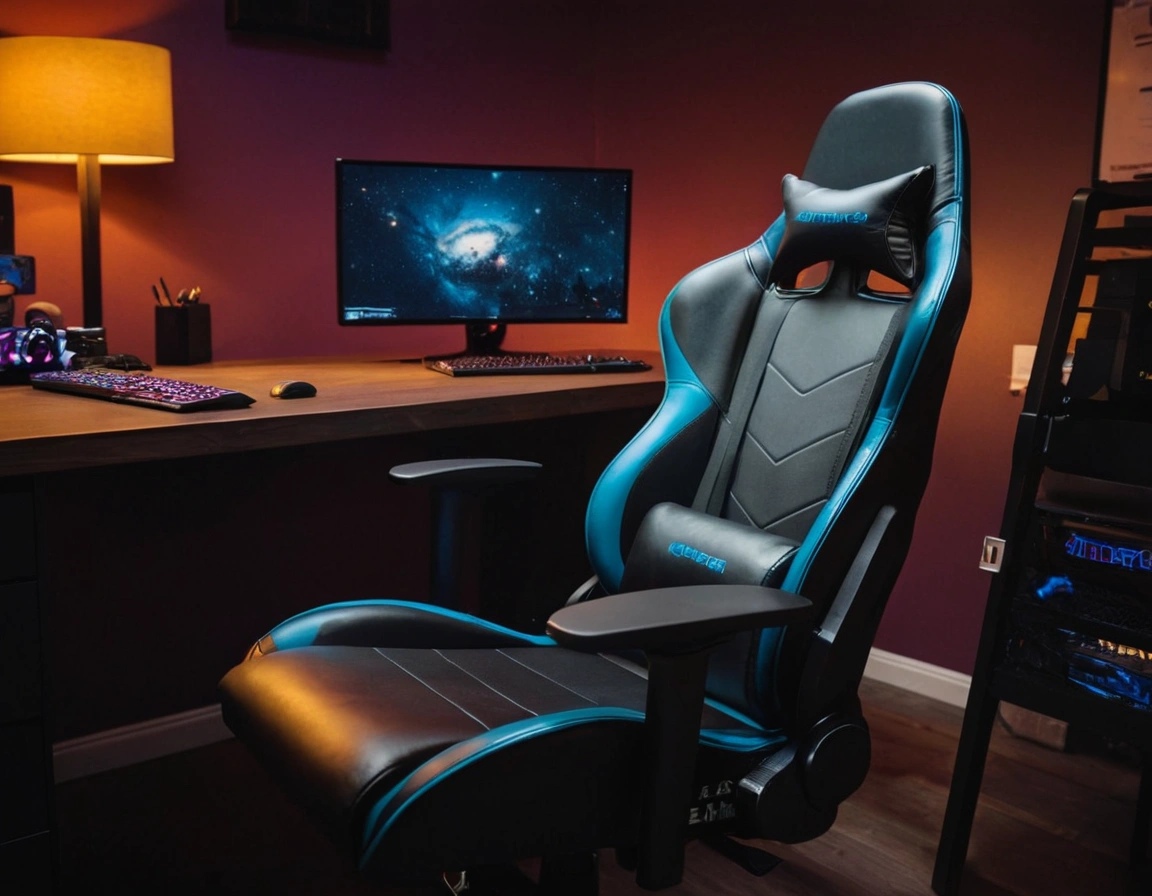
You’ve seen them. Those racing-style thrones with logos plastered on the headrest, sitting pretty at $400, $600, even $1,200. And you’ve probably asked yourself the same thing everyone asks: why are gaming chairs so expensive when a decent office chair can cost half that? I dug into this because the answer isn’t as simple as “brand markup.” There’s actual engineering, materials science, and a fair bit of marketing psychology behind that price tag.
The short answer nobody gives you
Gaming chairs cost more than regular chairs because they’re built around a different use case: sitting in the same position for 6, 8, or 12 hours straight without your back screaming. That requires denser foam, a sturdier frame, and adjustable components that cheap office chairs simply don’t include.
But here’s the part the marketing material won’t tell you: not every expensive gaming chair is worth it. Some brands charge a premium purely for the logo and the RGB lighting. Others genuinely deliver. Learning to tell the difference is where your money actually gets saved.
Materials: where the real cost lives
Walk into any furniture store and touch a $150 office chair. Then touch a $500 gaming chair. The difference is immediate. Gaming chairs typically use cold-cured high-density foam instead of the cheap polyurethane blocks you’ll find in budget seating. That foam doesn’t collapse after six months of daily use.
The upholstery matters too. PU leather (polyurethane) is the standard, but the good stuff has a thicker coating and a fabric backing that resists peeling. Breathable mesh variants cost even more because the manufacturing process is more complex. A single roll of premium PU leather can cost three to four times what a budget version does, and that cost gets passed down.
The frame itself is another factor. Cheap chairs use plastic bases and thin steel. Serious gaming chairs use reinforced steel or aluminum, often with a Class-4 gas lift cylinder rated for higher weights. That’s not marketing fluff—it’s a safety and durability issue.
If a chair claims to support 300+ pounds, it needs a frame and cylinder rated for it. That’s engineering, not decoration.
Ergonomics and adjustability: the hidden price drivers
Here’s where gaming chairs for gamers separate themselves from the pack. A cheap chair gives you up and down. A good gaming chair gives you 4D armrests (adjustable in four directions), a reclining backrest that goes from 90 to 180 degrees, adjustable lumbar support, and a headrest pillow that actually stays in place.
Each of those mechanisms adds parts, testing, and assembly time. The tilt mechanism alone—the piece that lets you rock and lock—is often the most expensive single component after the frame. Cheap versions use stamped metal that wears out. Good ones use cast steel and bearings.
And then there’s the certification. Chairs sold in the US and EU need to pass BIFMA or EN 1335 standards if the brand wants to make durability claims. Passing those tests costs money, and that cost is baked into the retail price.
Why some gaming chairs cost $200 and others cost $1,000
You can absolutely find a decent gaming chair for around $200. What you’re getting at that price is a basic frame, PU leather, two-directional armrests, and a simple tilt mechanism. It works. It’ll last a couple of years with moderate use.
Jump to $500–$700 and you’re paying for better foam density, metal base instead of plastic, 4D armrests, and a more refined recline system. This is where most serious gamers land, and honestly, it’s the sweet spot.
Above $1,000 you’re into premium territory: Herman Miller X Logitech, Secretlab Titan Evo XL, or high-end brands like Razer Iskur. These chairs use cold-cure foam that holds shape for a decade, magnetic headrests, and lumbar systems that actually move with your spine. Whether that’s worth it depends entirely on how many hours you sit.
The uncomfortable truth about marketing
A chunk of the price you pay goes to sponsorships. Streamers don’t get those chairs for free—brands pay six figures to have their logo on a Twitch overlay. Guess who covers that? You do.
That’s not necessarily bad. Some of those brands do make genuinely good chairs. But it means a $400 chair from an unknown brand might have better components than a $400 chair from a heavily sponsored brand. Always check the specs, not the logo.
Is a gaming chair actually worth the money?
If you sit for more than four hours a day—gaming, working, or both—yes. The math is simple. A $500 chair that lasts five years costs about $8 a month. A single physiotherapy session for lower back pain runs $80–$150. You do the math.
If you game an hour a day and otherwise use a dining chair, you don’t need a $600 gaming chair. Buy a $150 ergonomic office chair and put the rest into a better monitor. That’s the honest answer.
What you should not do is buy the cheapest racing-style chair on Amazon and expect it to fix your posture. Those $80 models are basically buckets with wheels. They look the part and fall apart in a year.
Quick checklist before you buy
- Weight rating: at least 30 lbs above your actual weight
- Foam type: cold-cured or high-density, not “high resilience” vague claims
- Armrests: 4D if you can afford it, 3D minimum
- Base: aluminum or reinforced steel, not plastic
- Warranty: 3+ years on the frame tells you how confident the brand is
- Return policy: free returns matter because chairs are personal
At the end of the day, why gaming chairs are so expensive comes down to a mix of real engineering and real marketing. The best move is to ignore the hype, read the specs, and buy the chair that matches how you actually sit—not how you imagine you’ll sit.