

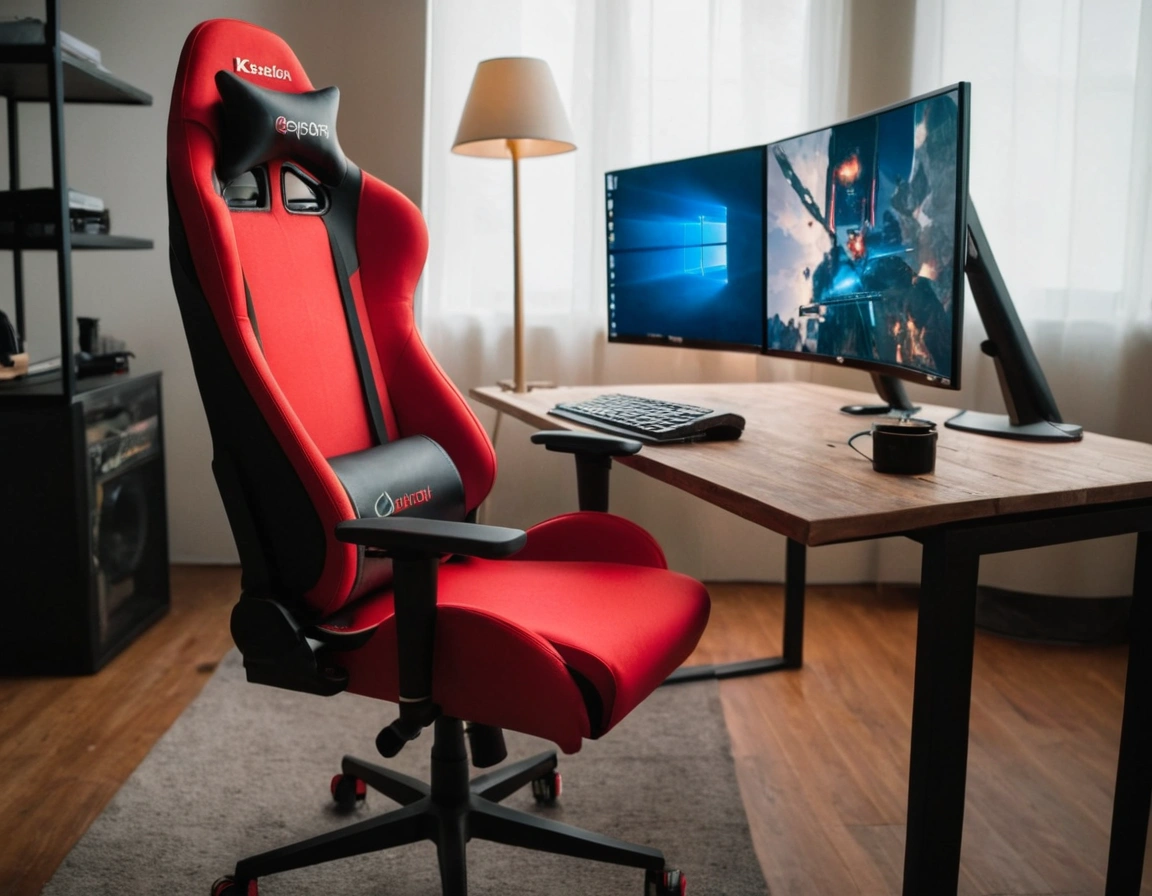
If you’re the kind of player who clocks four, six, even ten hours in a single sitting, you already know the drill: after hour three, your lower back starts sending signals, and by hour five you’re shifting around like you’re sitting on hot coals. Picking the best gaming chair for long sessions isn’t about looking cool on stream. It’s about not wrecking your spine while you grind ranked.
I’ve been through three chairs in five years. The first one was a cheap “racing style” model that looked amazing and destroyed my lumbar area in under a year. The second one was better, but the armrests wobbled after six months. The third one finally got it right. Here’s what I learned, and what you should actually look for before dropping your money.
Why Your Back Hates Cheap Gaming Chairs (And What to Do About It)
Most budget gaming chairs share the same dirty secret: they’re built on a generic frame with a thin foam layer and a bucket seat shape that forces your shoulders forward. That’s fine for a 30-minute session. It’s a disaster for an ergonomic gaming chair designed for marathon sessions.
Real lumbar support means an adjustable cushion or curve that fills the gap between your lower back and the seat back. Not a strap-on pillow that slides down every twenty minutes. If the chair doesn’t have built-in adjustable lumbar, walk away.
Here’s my stance: any gaming chair under $150 is a gamble. You might get lucky, but the foam density, the gas lift, and the tilt mechanism are the first things manufacturers cut to hit that price. A quality gaming chair for long hours starts around $250 and goes up from there.
Ergonomic Gaming Chairs vs. Racing Style: The Real Difference
Racing-style chairs mimic bucket seats from actual race cars. They look aggressive, they hug your body, and they’re terrible for posture over long periods because they push your shoulders forward and your head down. Ergonomic gaming chairs, on the other hand, are built more like high-end office chairs with a gaming aesthetic.
If you play for more than two hours at a time, go ergonomic. Period. The adjustable gaming chair category has exploded in 2026, and you can now find models with 4D armrests, dynamic lumbar support, and synchro-tilt mechanisms that rival Herman Miller at a third of the price.
Don’t be fooled by marketing. “Ergonomic” on a product page means nothing. Look for these specific specs:
- Adjustable lumbar support (height AND depth, ideally)
- 4D armrests that move up, down, forward, back, and rotate
- Recline of at least 135° with a locking mechanism
- Seat depth adjustment or a seat pan that fits your thigh length
- Breathable mesh or hybrid upholstery, not just PU leather
The Material Matters More Than You Think
PU leather is the default for most gaming chairs, and it’s a sweat trap. After two hours in a warm room, your back is sticking to the chair and you’re peeling yourself off every time you stand up. Mesh backrests breathe. Fabric covers stay cooler. And if you live somewhere hot, this single factor will matter more than any other feature.
Memory foam sounds premium, but cheap memory foam compresses into a brick within months. High-resilience (HR) foam holds its shape far longer. If the spec sheet doesn’t tell you the foam density, that’s a red flag.
My rule of thumb: if a chair’s product page doesn’t mention foam density, gas lift class, or warranty length on the frame, they’re hiding something.
How to Choose the Best Gaming Chair to Play for Hours: A No-Nonsense Checklist
Forget the hype. Here’s what actually separates a chair you’ll love for five years from one you’ll regret in five months:
- Weight capacity and frame material. Steel frame or nothing. Nylon bases crack. Aluminum bases are better but pricier.
- Gas lift class. Class 4 is the standard for durability. Class 3 is acceptable. Anything lower is a ticking time bomb.
- Warranty. A quality gaming chair comes with at least 2 years on the mechanism and 5 on the frame. If it’s 90 days, run.
- Recline and lock. You want to lean back between matches without the chair snapping forward.
- Headrest and lumbar pillows. Ideally removable and adjustable, not stitched in.
One more thing people ignore: the seat height range. If you’re under 5’6″ or over 6’2″, a one-size chair will either leave your feet dangling or your knees above your hips. Both wreck your circulation over long sessions. Check the height range against your own measurements before buying.
Are Premium Gaming Chairs Worth the Investment in 2026?
Short answer: yes, if you play more than 15 hours a week. A $400 chair that lasts five years costs you about $6.60 a month. A $150 chair that falls apart in a year costs you $12.50 a month, plus the physio bills.
The durability of gaming chairs for long sessions comes down to three things: the frame, the gas lift, and the foam. Everything else is cosmetic. Brands like Secretlab, Herman Miller’s gaming line, and a handful of newer ergonomic-focused companies have figured this out. The racing-style gimmick is slowly dying, and that’s a good thing for anyone who actually sits in these chairs for a living.
My honest advice: set a budget of at least $300, prioritize adjustable lumbar support and a breathable backrest, and ignore anything that promises “ultimate comfort” without telling you the foam density. Your spine will thank you around hour six.