

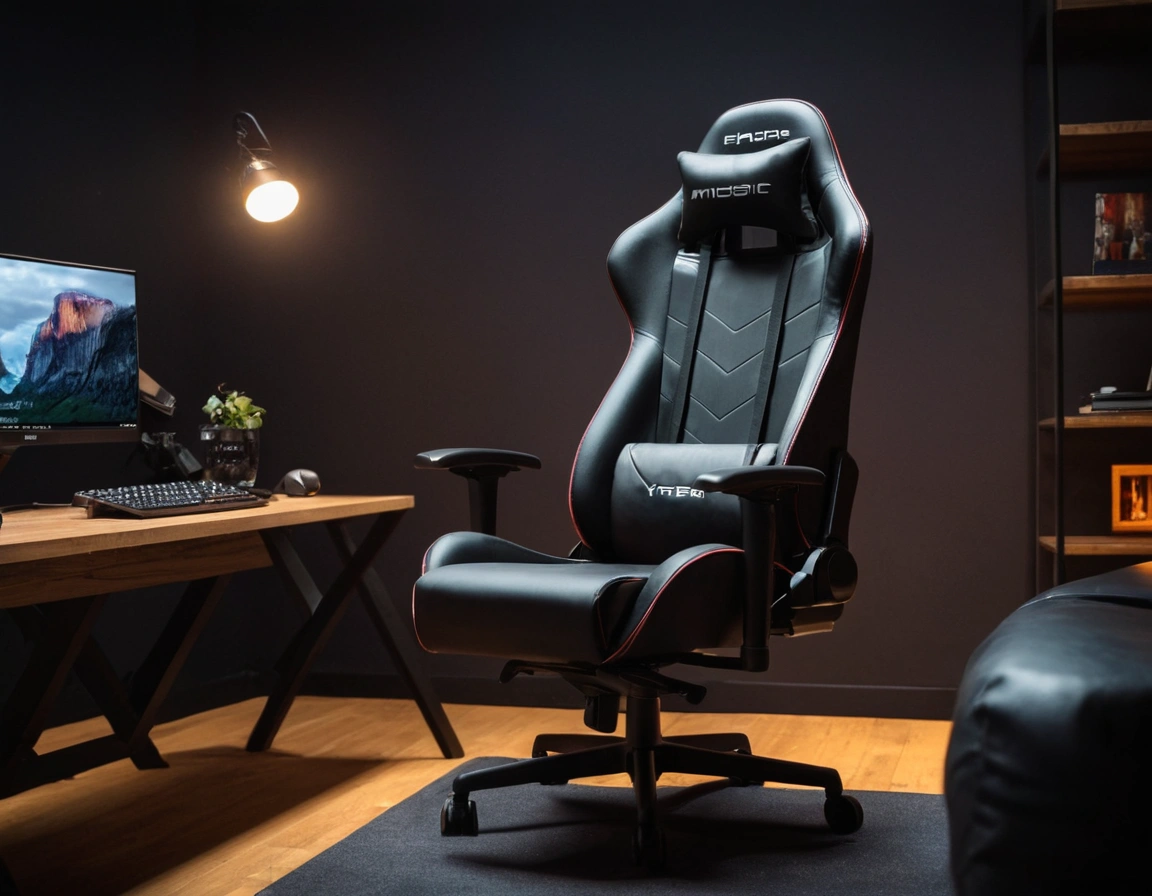
If you’ve ever spent three hours in a “one-size-fits-all” gaming chair and ended up with a numb lower back and tingling legs, you already know the problem. The gaming chair by height issue is real, and most brands still sell you the same bucket seat whether you’re 5’2″ or 6’5″. I dug into ergonomics research, manufacturer spec sheets, and real user complaints to give you the straight answer.
Here’s the deal: a chair that’s too tall for you forces your feet to dangle. A chair that’s too short for you makes your shoulders hunch forward. Both wreck your posture, and neither gets fixed by adding a lumbar pillow.
Why Your Height Changes Everything in a Gaming Chair
The single most important number isn’t the chair’s max weight. It’s the seat height range. For most people, the ideal seat height lets your feet sit flat on the floor with knees bent at roughly 90 degrees. If you’re 5’4″ and the chair’s lowest setting is 19 inches off the ground, you’re already screwed.
According to ergonomic guidelines used in office furniture (BIFMA and ANSI/HFES 100 standards), a chair’s seat height should ideally adjust across about 16 to 22 inches to cover the 5th to 95th percentile of adult users. Most gaming chairs only hit 18 to 22 inches. That gap is exactly why shorter players suffer.
For tall players, the killer spec is backrest height and seat depth. A 32-inch backrest on a 6’4″ frame means your head and neck hang off the top. You end up slouching to get neck support that isn’t there.
Gaming Chair by Height: Quick Reference Numbers
After cross-checking multiple manufacturer specs (Secretlab, Herman Miller, AndaSeat, DXRacer, Noblechairs), here’s the honest breakdown:
- Under 5’4″ (163 cm): Look for seat height minimum of 16-17 inches, seat depth under 19 inches, backrest no taller than 30 inches. Armrests need to drop to at least 22 inches from the floor.
- 5’4″ to 5’10” (163-178 cm): Standard mid-size chairs work. Seat height 17-21 inches, seat depth 19-21 inches, backrest 30-33 inches.
- 5’10” to 6’2″ (178-188 cm): You need the “XL” tier. Seat height 18-22 inches, seat depth 21-23 inches, backrest 33-36 inches.
- Over 6’2″ (188 cm+): Only true big-and-tall chairs fit. Seat height max of 22-24 inches, seat depth 23-25 inches, backrest 36+ inches, and a wider seat pan (minimum 22 inches across).
If a brand doesn’t publish these numbers on the product page, that’s your red flag. Buy somewhere else.
The 90-Degree Rule (And Why Short Gamers Ignore It)
Sit in your current chair right now. Are your feet flat? Are your knees at 90 degrees? If not, you’re putting pressure on your thighs and lower back every single session. This is the most overlooked factor when choosing a gaming chair for short people.
Here’s the fix that actually works: get a chair whose minimum seat height is below 18 inches, or buy a footrest. A footrest isn’t a gimmick. It’s what makes a $400 chair usable for someone 5’3″.
Short gamers don’t need smaller chairs. They need chairs that go lower. Those are two completely different products, and stores keep confusing them.
Tall Gamers: Stop Buying XL Chairs That Aren’t Actually XL
“XL” in gaming chair marketing usually means wider, not taller. That’s the scam. A wide seat with a 32-inch backrest still leaves your neck hanging. What tall players actually need is a taller gas lift (Class 4, 200mm stroke), a deeper seat pan, and a headrest that reaches your actual head.
The best gaming chairs for tall guys in 2026 tend to fall into two categories: the Secretlab Titan Evo XL, the AndaSeat Kaiser 4 XL, and the Herman Miller Vantum (if you don’t mind a non-racing look). All three hit a seat height of 21+ inches with backrests over 34 inches.
Watch out for weight ratings too. Tall usually means heavier, and a chair rated for 240 lbs with a Class 3 gas lift will start sinking after six months. Look for Class 4 lifts rated 300+ lbs even if you weigh less.
Ergonomic Gaming Chair Adjustments That Actually Matter by Height
Forget RGB lighting and massage motors. These are the four adjustments that decide whether a chair fits your height:
- Seat height range: The full span matters, not just the max. A range under 5 inches is useless for shorter players.
- Seat depth (sliding seat): Critical for tall players. A sliding seat pan gives you 2-3 extra inches of thigh support without buying a new chair.
- Armrest height and 4D movement: Your elbows should rest at 90 degrees without lifting your shoulders. If armrests don’t drop low enough, your shoulders climb and your neck pays for it.
- Lumbar support position: It must hit the natural curve of your lower back, not the middle. For tall players this means a lumbar pad that slides vertically.
If a gaming chair lacks at least three of these, it’s a decorative seat, not an ergonomic one.
Small vs Large Gaming Chairs: What the Size Labels Really Mean
Most brands use S, R, and XL labels (or similar). The “R” size covers around 5’3″ to 6’0″ — that’s the biggest chunk of the market, and it’s why so many people fit “okay” but not great.
If you’re at the edges of that range, don’t compromise. A gaming chair that fits your body size properly beats a premium model that doesn’t. You’ll feel the difference within one week, and your spine will thank you for years.
Also worth knowing: seat width isn’t just about comfort. Too narrow and your hips get pinched. Too wide and you can’t use the armrests without leaning. Aim for a seat width that leaves about 2 inches of space on each side of your hips.
Final Reality Check Before You Buy
Measure yourself properly: sit on a hard chair, feet flat, and measure from the floor to the crease behind your knee. That’s your ideal seat height. Then add 1-2 inches for adjustability. Write the number down and compare it against every spec sheet before you click buy.
If a brand hides its seat height range, assume it doesn’t fit you. If a review doesn’t mention the reviewer’s height, ignore it. And if you’re between two sizes, go with the one whose minimum seat height is closest to your measurement — not the one with the cooler design.
Your height isn’t a preference. It’s a hard spec. Treat it like one and you’ll never waste money on a chair that looks great and fits like a shoe two sizes off.