
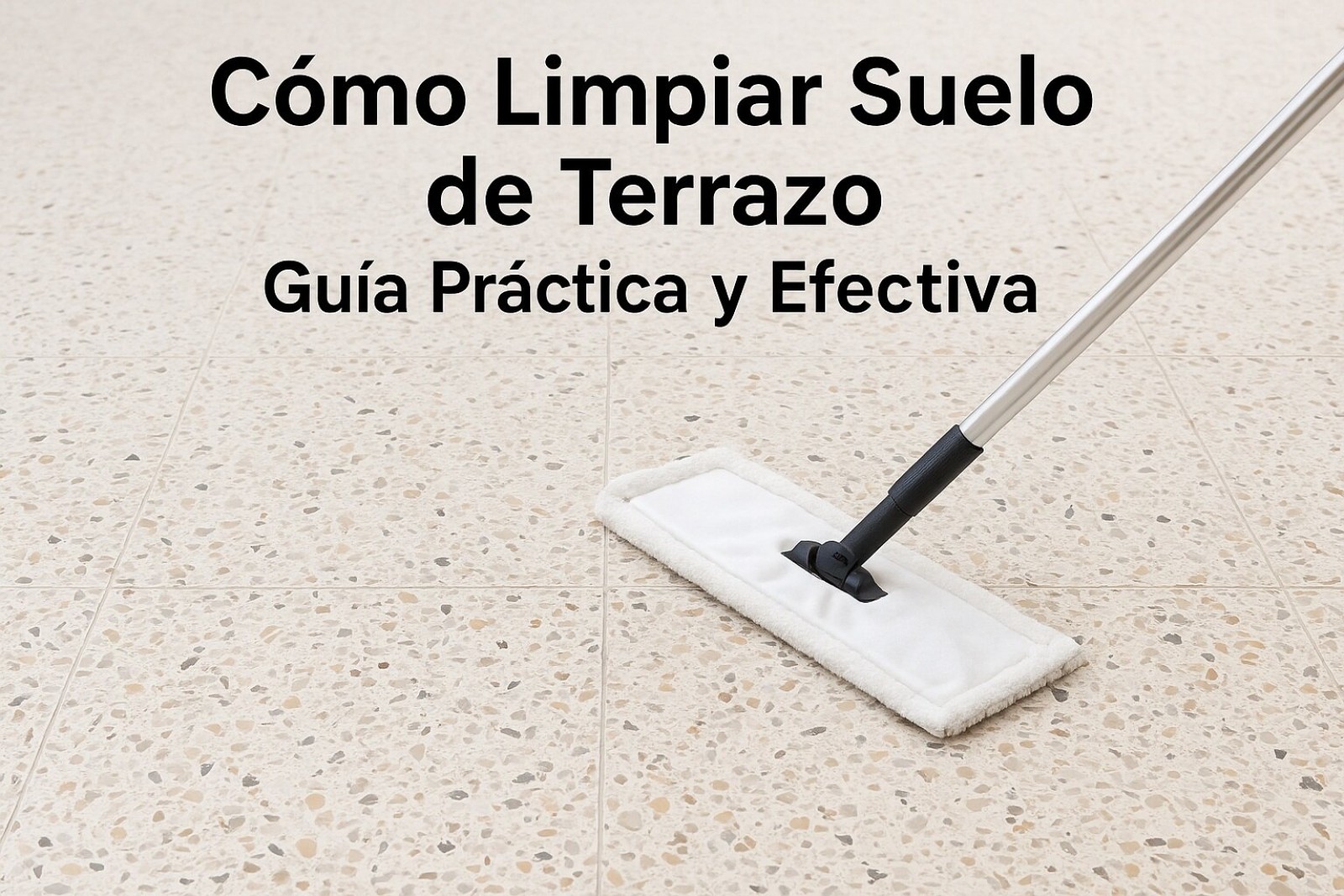
Terrazzo is a building material with a long tradition, prized for its durability and unique aesthetics. However, its maintenance can raise doubts. I found numerous forums and blogs online specializing in DIY and cleaning that explained that, although it is a resistant floor, it requires specific care to preserve its shine and avoid damage. This guide compiles those proven methods, focusing on practical solutions for everyday use and for more complicated situations.
The Importance of Knowing How to Clean Terrazzo Without Damaging It
One of the most common mistakes made, as I was able to read in several sources, is using inappropriate cleaning products. Terrazzo is a mixture of cement or resin and aggregates such as marble, glass, or granite, which makes it relatively porous.
If acidic cleaners are used, such as vinegar or bathroom cleaning products, the surface can be corroded, dulled, and made more susceptible to stains. The information gathered indicated that the goal should always be to clean deeply without altering the integrity of the material. Incorrect care not only ruins the visual appearance but can also lead to costly repairs.
The key seems to lie in the pH of the products. For routine maintenance, neutral or slightly alkaline cleaners are recommended. These are capable of dissolving dirt and grease without attacking the composition of the floor. It is essential to avoid pure bleach and physical abrasives, such as steel wool pads, which scratch the surface.
Another crucial point that was mentioned was frequency. Sweeping or vacuuming daily to remove dust and abrasive particles is just as important as wet cleaning. These particles act like fine sandpaper, gradually wearing down the shine of the terrazzo over time. Frequent dry cleaning is, therefore, the first line of defense.
Products for Cleaning Terrazzo That Actually Work
Upon researching, it became evident that there is great confusion about which products are safe. In professional cleaning forums, it was emphasized that the simplest approach is usually the most effective. For weekly cleaning, a solution of neutral soap or a liquid dish detergent diluted in warm water is a very safe and effective option.
For cases of more persistent dirt or in high-traffic areas, specific cleaners for natural stone or terrazzo were mentioned. These products are formulated to clean deeply without leaving residues that attract more dirt and without damaging the sealer. It is vital to follow the manufacturer’s instructions and, when in doubt, always test on a small, discreet area.
I found testimonials from people who completely advised against the use of ammonia or acrylic waxes. Ammonia can weaken the cement and discolor the aggregates, while waxes create an artificial layer that, over time, turns yellowish and makes any future polishing or resealing treatment more difficult.
A natural alternative that was frequently cited for ecological cleaning was the use of baking soda. For localized stains, a paste can be made with water, applied to the area, left to act, and then rinsed. However, it was stressed that this is not a method to be used on large surfaces regularly, since its slightly abrasive texture could, in the long run, affect the shine.
How to Remove Terrazzo Stains Safely
Stains are the great headache with this type of flooring. The available information indicated that speed is essential. A recent stain is removed much more easily than one that has set in. The first step is to identify the type of stain in order to act correctly.
For organic stains (coffee, wine, fruit), the general recommendation was to make a paste with 10-volume hydrogen peroxide and cornstarch. It is applied to the stain, left to dry completely, and then removed with a plastic spatula. Hydrogen peroxide acts as a gentle bleach without being aggressive to the stone.
In the case of grease or oil stains, the use of mild solvents was mentioned. A cloth can be soaked in mineral turpentine and placed over the stain for several hours. The grease dissolves and is absorbed by the cloth. Afterwards, it is crucial to wash the area with neutral soap to remove any remaining solvent.
For rust marks, which are particularly problematic, specific stone stain removers containing chelating agents were cited. Bleach or hydrochloric acid should never be used, as this would set the rust stain permanently or severely damage the surface.
The Process of Polishing Dull Terrazzo to Restore Its Shine
When a terrazzo floor loses its shine and looks dull, the solution is not always cleaning, but polishing. In several tutorials and technical articles, it was explained that natural wear or continuous abrasive cleaning can leave terrazzo dull. In these cases, a deep cleaning will not be enough.
For unsealed or heavily worn terrazzo, the process described involved first an exhaustive cleaning. Then, a polisher with fine-grit diamond discs or acrylic wool pads with a specific polishing product (crystallization product) for terrazzo could be used. This process, known as crystallization, generates heat and pressure, sealing the pores and creating a shiny and highly resistant surface.
However, it was warned that this is a job that requires some practice. For an individual, renting the machinery and following the instructions to the letter can give good results in small spaces. For large or heavily damaged surfaces, the unanimous opinion was that it is better to hire a professional to avoid irreversible damage.
After polishing, it is the ideal time to apply a sealer. The sealer penetrates the pores of the terrazzo, creating an invisible barrier that protects against stains and facilitates daily cleaning. A correctly sealed terrazzo repels water and dirt, maintaining its like-new appearance for much longer.
Daily Maintenance of Terrazzo Flooring to Preserve It
The best strategy, according to all the sources consulted, is prevention. Correct daily maintenance avoids having to resort to aggressive restoration processes. Placing doormats at entrances to trap dirt and grit is one of the simplest and most effective measures.
It is recommended to sweep or use a dry microfiber mop daily. A vacuum cleaner is also a good option, but you must ensure that the wheels are clean so as not to scratch the floor. This simple habit eliminates the particles that cause microscopic wear of the material.
For wet cleaning, which should not be necessary daily unless traffic is very intense, a well-wrung mop should be used. Excess water is the enemy of terrazzo, especially if it is not well sealed, as it can seep through the pores and leave marks or even cause chipping.
The use of steam mops on terrazzo floors was strongly advised against. High-pressure steam can force moisture and dirt into the pores, which in the long run will lead to moisture problems and a permanently dirty appearance.
Advantages of Terrazzo That Justify Its Care
Despite requiring specific care, the advantages of having a terrazzo floor are numerous. It is an extremely durable and long-lasting material, capable of lasting decades and even centuries with proper maintenance, something that was highlighted in all articles about construction.
Its aesthetic versatility is another of its great strengths. Being composed of aggregates, it can be customized in an infinite number of colors and designs, adapting to any decorative style, from the most classic to the most contemporary. It is a floor that never goes out of style.
Furthermore, it is a hygienic floor. When properly sealed, its surface is not porous, preventing the proliferation of dust mites, bacteria, and fungi. This makes it an excellent option for people with allergies or in environments where cleanliness is a priority.
Finally, its sustainability is a growing value. It is often made with local and recycled materials, and its enormous longevity prevents having to replace the floor every few years, reducing the environmental impact compared to other shorter-lasting coverings.
Frequently Asked Questions (FAQ)
Frequently Asked Questions (FAQ)
What product is good for cleaning terrazzo without damaging it?
The safest option is to use a cleaner that is neutral or slightly alkaline, diluted in warm water. Neutral soaps or a very diluted dish detergent are effective and economical options. It is essential to avoid acidic products such as vinegar or bleach.
Can vinegar be used to clean terrazzo flooring?
No, it is not recommended. Vinegar is acidic and can corrode the surface of the terrazzo, especially the cement that binds the aggregates. Its continued use dulls the shine, makes the floor more porous, and makes it vulnerable to stains.
How often should a terrazzo floor be sealed?
The frequency depends on foot traffic. In a private home, it is recommended to check the sealing every two or three years. A simple test is to pour a few drops of water on the surface; if the water is not absorbed and forms a droplet, the sealing is still in good condition. In commercial areas, it may be necessary annually.
How can stubborn stains be removed from terrazzo?
It depends on the type of stain. For organic ones (coffee, wine), a paste of hydrogen peroxide and cornstarch is effective. For grease, a cloth with mineral turpentine. For rust, specific stain removers for stone are needed. Always test first in an inconspicuous area.
Is it advisable to polish a heavily worn terrazzo?
Yes, polishing or crystallization is the appropriate method to restore the shine of a dull and worn terrazzo. However, it is a technical process that, for large surfaces or if you do not have experience, is best left in the hands of professionals to guarantee an optimal result without damage.