

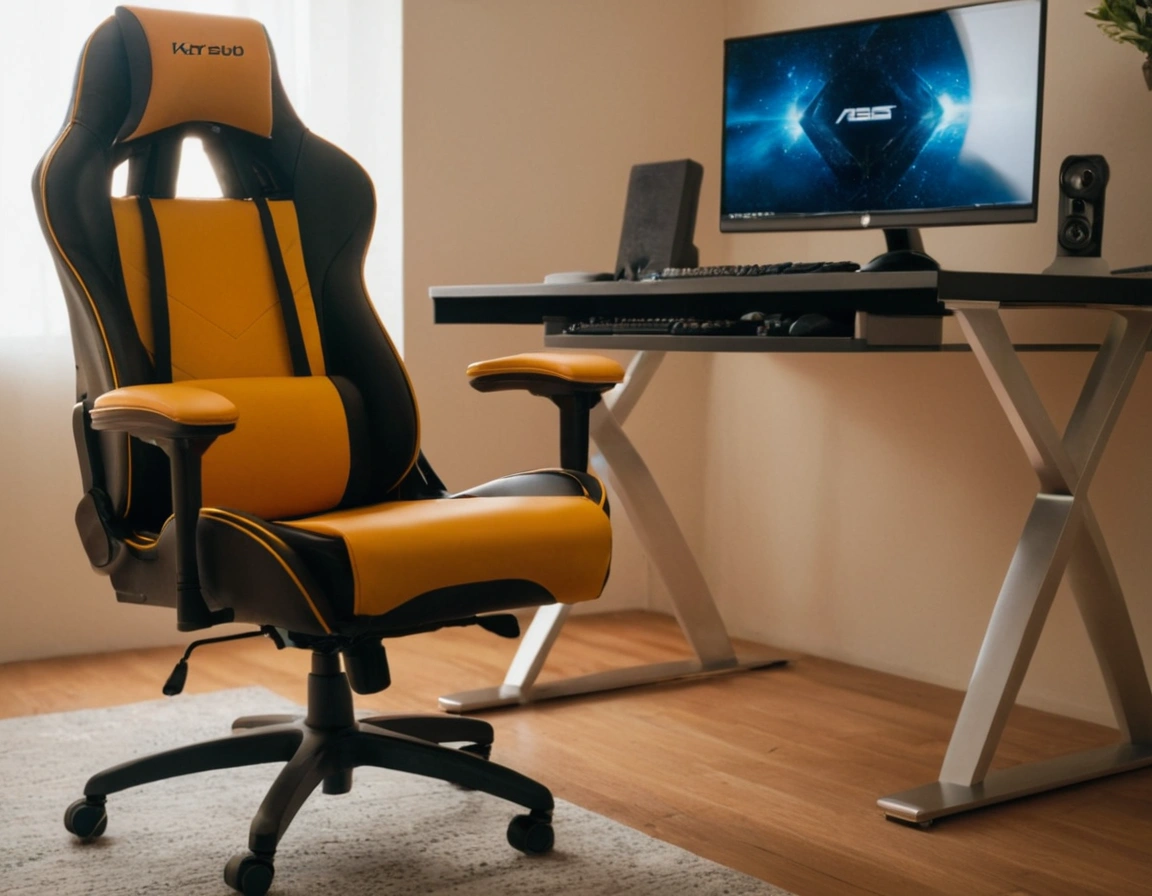
You’ve seen them everywhere: flashy racing-style chairs with RGB lights and logos that scream “pro gamer.” But here’s the uncomfortable truth — most people buy a gaming chair based on looks and end up with back pain six months later. The real secret to choosing the perfect gaming chair has nothing to do with aesthetics. It’s about matching the chair to your body, your desk setup, and how many hours you actually sit.
I’ve tested and researched enough chairs to know that a good gaming chair isn’t the most expensive one, nor the one with the coolest design. It’s the one that keeps your spine neutral after a four-hour session. Let’s break down what actually matters.
Why Most Gaming Chairs Fail (And What to Look For Instead)
Here’s a fact the marketing departments won’t tell you: many gaming chairs are just racing car seats repurposed for desks. They look aggressive but offer terrible ergonomics for actual desk work. The best gaming chair for you needs to support your lumbar curve, not just cradle you like a bucket seat.
Before you buy anything, measure your desk height and your body. A chair that’s too tall for your desk forces your shoulders up. Too low and your wrists bend awkwardly. That’s how you get tension headaches and carpal tunnel.
Lumbar support: the non-negotiable feature
If there’s one feature you should never compromise on, it’s adjustable lumbar support. Your lower back has a natural inward curve, and without support, it flattens over time. That’s when the pain starts. A good lumbar pillow that moves up and down — or better yet, a built-in adjustable mechanism — is worth more than any leather finish.
I’d argue that a chair with fixed lumbar support is almost useless unless it happens to hit your back perfectly. And the odds of that are low. Adjustability is the difference between a chair that lasts five years and one that ends up in the garage.
Ergonomic Gaming Chairs: The Only Type Worth Buying
Forget the “gaming” label for a second. What you actually want is an ergonomic gaming chair — one designed around human anatomy, not around a race track. That means:
- Adjustable seat height so your feet rest flat on the floor
- Seat depth that leaves two to three fingers of space behind your knees
- Armrests that adjust in height, angle, and distance from your body
- A backrest that reclines and locks at multiple angles
- Breathable material — mesh or fabric — to prevent sweating
PU leather looks premium but turns into a sauna during summer. If you game in a warm room, mesh is your friend. It’s not as flashy, but your back will thank you.
The headrest and neck support myth
A lot of chairs include a tiny pillow strapped to the top. Most people use it wrong — they place it behind their head, which pushes their neck forward. That’s terrible for posture. A headrest should support the base of your skull, not the crown. If it doesn’t adjust, it’s decoration.
Gaming Chair for Long Sessions: What Actually Holds Up
If you’re the type who plays for six hours straight or works from home all day, durability becomes critical. The best gaming chair for long sessions needs a gas lift that doesn’t sag, a frame that doesn’t creak, and foam that doesn’t flatten into a pancake.
High-density foam is the key. Cheap chairs use low-density foam that compresses within weeks. Look for chairs that specify foam density — if they don’t mention it, that’s a red flag.
“A gaming chair is an investment in your spine. Treat it like you’d treat a mattress — you spend hours on it every day.”
Also check the weight capacity. If the chair is rated for 250 pounds and you’re 240, you’re stressing the frame. Go for a chair with at least 50 pounds of headroom.
How to Find the Perfect Gaming Chair for Your Body
There’s no universal “perfect” chair. A chair that fits a 5’4″ person will destroy a 6’2″ person’s shoulders. So here’s my blunt advice: ignore reviews that don’t mention the reviewer’s height and weight. They’re useless to you.
Instead, look for chairs with adjustable everything. Seat height, armrests, lumbar depth, recline tension, headrest height. The more adjustments, the more likely you’ll find your sweet spot.
Materials that last
Aluminum base beats plastic. Steel frame beats particle board. Cold-cure foam beats cheap padding. And a Class 4 gas lift is safer and lasts longer than Class 2. These details separate a chair that lasts a decade from one that breaks in a year.
Also, consider the wheels. Hard plastic casters scratch wooden floors. If you have hardwood, get rollerblade-style wheels or a floor mat. It’s a small thing that saves you money.
Adjustable Features: The Real Secret to Comfort
You can have the most expensive chair in the world, but if it doesn’t adjust to your body, it’s worthless. Gaming chairs with adjustable features let you fine-tune your posture throughout the day. That’s huge, because your body doesn’t stay in one position for eight hours.
When you’re focused, you lean forward. When you’re relaxed, you lean back. A chair that supports both positions without you having to fight it — that’s the one you want.
My take: prioritize lumbar adjustability and armrest flexibility over everything else. Recline is nice, but you can always add a footrest. You can’t add lumbar support to a chair that doesn’t have it.
Final Word: Don’t Buy With Your Eyes
The secret to choosing the perfect gaming chair isn’t a secret at all. It’s just that most people ignore the boring stuff. They buy based on color, brand, and what their favorite streamer uses. Then they wonder why their back hurts.
Do the opposite. Measure your body. Check the foam density. Make sure the lumbar support moves. Test the armrests. And for the love of your spine, don’t buy PU leather if you sweat easily.
Get those things right, and you’ll have a chair that keeps you comfortable for years — no matter how many ranked matches you grind through.